
Why Traumatic Brain Injury Symptoms Are Often Missed After a Costa Mesa Car Accident
Costa Mesa Traumatic Brain Injury Lawyer Explains Why TBI Symptoms Are Often Missed After a Car Accident | Law Office of Jasminder Gill
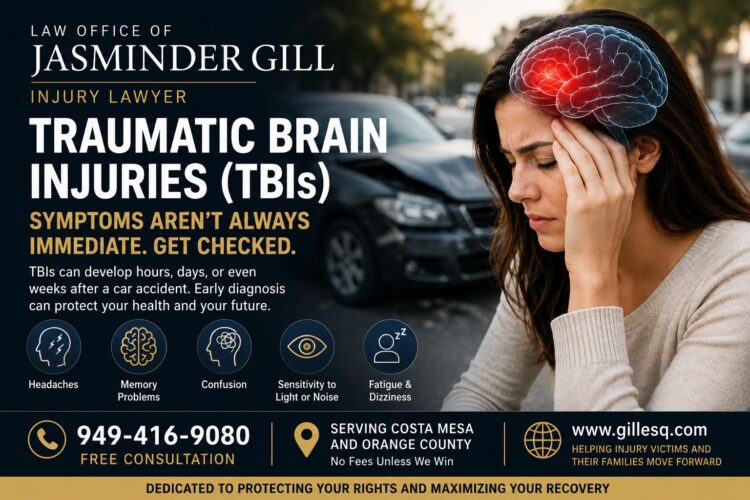
After a car accident in Costa Mesa, many injuries are immediately obvious. Broken bones, cuts, and vehicle damage often receive immediate attention. Traumatic brain injuries (TBIs), however, are frequently overlooked because symptoms may not appear until hours, days, or even weeks after a collision.
This delayed onset makes traumatic brain injuries particularly dangerous. Many accident victims initially believe they escaped serious injury, only to develop persistent headaches, memory problems, dizziness, difficulty concentrating, or personality changes days later.
Throughout Costa Mesa and Orange County, traumatic brain injuries commonly occur following crashes on Harbor Boulevard, Newport Boulevard, Bristol Street, Fairview Road, Baker Street, the 55 Freeway, and Interstate 405. Even relatively low-speed collisions can result in significant head trauma.
Because traumatic brain injuries are often invisible, insurance companies frequently challenge these claims. Early diagnosis, proper medical treatment, and thorough documentation can play a critical role in both recovery and a personal injury claim.
At the Law Office of Jasminder Gill, we help accident victims throughout Costa Mesa and Orange County pursue compensation for traumatic brain injuries and other serious accident-related injuries.
Call 949-416-9080 for a free consultation
The Hidden Nature of Traumatic Brain Injuries
After a car accident, injuries are not always immediately visible. While broken bones and lacerations demand urgent attention, traumatic brain injuries (TBIs) often develop quietly, with symptoms that may not appear until hours, days, or even weeks later. This delayed onset can make TBIs especially dangerous, as individuals may underestimate the severity of their condition or fail to seek timely medical care.
For those navigating the aftermath of a crash, working with a skilled Costa Mesa auto accident attorney can be critical in identifying and documenting these injuries early. Proper legal guidance ensures that what may initially seem like a minor issue is taken seriously before it evolves into a long-term health and financial burden.
TBIs can range from mild concussions to severe brain damage, and even so-called “mild” injuries can have lasting consequences. Memory loss, cognitive impairment, mood changes, and chronic headaches are just a few of the challenges individuals may face. Because these symptoms are often subtle or misunderstood, many cases go undiagnosed in the early stages.
Why TBI Symptoms Are Frequently Missed
One of the most significant challenges with traumatic brain injuries is that they do not always present in obvious ways.
After an accident, adrenaline can mask pain and discomfort, allowing individuals to feel relatively normal in the immediate aftermath. It is only after this initial shock subsides that symptoms begin to surface.
In many cases, individuals may attribute symptoms such as dizziness, fatigue, or confusion to general stress or minor injury rather than a brain injury. This is particularly common in rear-end collisions or low-impact crashes, where the absence of visible trauma leads people to assume they are unharmed.
Medical evaluations immediately following an accident may also fail to detect a TBI. Standard imaging tests like CT scans and MRIs do not always reveal concussions or mild brain injuries. As a result, patients may be discharged without a clear diagnosis, only to experience worsening symptoms later.
This gap between injury and diagnosis can create complications not only for medical treatment but also for legal claims.Insurance companies may argue that the injury is unrelated to the accident or that it is not as severe as claimed, making early documentation and consistent medical follow-up essential.
Common Symptoms That Should Never Be Ignored
Traumatic brain injuries can affect nearly every aspect of a person’s life. While symptoms vary depending on the severity of the injury, certain warning signs should always be taken seriously.
Persistent headaches, difficulty concentrating, memory problems, sensitivity to light or noise, and changes in mood or behavior are among the most common indicators of a TBI. Some individuals may also experience sleep disturbances, blurred vision, or a sense of disorientation.
What makes these symptoms particularly challenging is that they may appear gradually. A person may feel fine immediately after an accident but begin to notice cognitive or emotional changes days later. In other cases, symptoms may fluctuate, creating a false sense of recovery before worsening again.
Recognizing these patterns and seeking prompt medical evaluation can make a significant difference in both recovery and the strength of a personal injury claim.
Proving a Traumatic Brain Injury in a Legal Claim
Establishing a traumatic brain injury in a personal injury case requires more than simply reporting symptoms. Because TBIs are often invisible and difficult to measure, proving their existence and impact involves a combination of medical evidence, expert testimony, and detailed documentation.
Medical records are the foundation of any TBI claim. These records should reflect consistent reporting of symptoms, follow-up appointments, and any diagnoses or treatment plans. Gaps in treatment can be used by insurance companies to challenge the validity of the claim, so continuity of care is critical.
In many cases, expert witnesses play a key role. Neurologists, neuropsychologists, and other specialists can evaluate cognitive function and provide insight into how the injury affects daily life. These evaluations often include cognitive testing, which can demonstrate deficits in memory, attention, and problem-solving abilities.
Personal testimony is also important. Statements from the injured individual, family members, and coworkers can help illustrate changes in behavior, personality, and overall functioning. These real-world observations provide context that medical records alone may not capture.
The Role of Life Care Planning in TBI Cases
For more severe traumatic brain injuries, the long-term impact can be profound. Individuals may require ongoing medical treatment, rehabilitation, and assistance with daily activities. In these cases, life care planning becomes an essential component of the claim.
A life care plan outlines the anticipated future needs of the injured individual, including medical care, therapy, medications, and support services. It also accounts for costs associated with reduced earning capacity and the need for long-term assistance.
By presenting a comprehensive picture of future expenses, life care plans help ensure that settlements reflect the true cost of the injury. Without this level of planning, there is a risk that compensation will fall short, leaving individuals and their families to bear the financial burden over time.
Challenges in Dealing with Insurance Companies
Insurance companies often approach TBI claims with skepticism, particularly when symptoms are not immediately documented or supported by imaging studies. They may argue that the injury is exaggerated, unrelated to the accident, or caused by a pre-existing condition.
This is why early and thorough documentation is so important. Seeking medical attention as soon as symptoms arise, following prescribed treatment plans, and maintaining detailed records can help counter these arguments.
Legal representation is equally important. An experienced attorney understands the tactics used by insurance companies and can advocate for a fair evaluation of the claim. They can also coordinate with medical experts to build a strong case that clearly demonstrates the extent of the injury and its impact on the individual’s life.
Moving Forward After a Traumatic Brain Injury
Recovering from a traumatic brain injury is often a long and uncertain process. The physical, cognitive, and emotional challenges can affect every aspect of daily life, from work and relationships to basic independence.
Taking the right steps early, such as seeking medical care, documenting symptoms, and obtaining legal guidance, can make a meaningful difference in both recovery and financial stability. Understanding the nature of TBIs and the challenges involved in proving them is an important part of protecting your future.
Get Help from a Costa Mesa Brain Injury Lawyer
If you or a loved one has suffered a traumatic brain injury, you don’t have to deal with insurance companies alone.
If you’re searching for a brain injury lawyer near you, The Law Office of Jasminder Gill represents injury victims in Costa Mesa, Newport Beach, Santa Ana, Irvine, and throughout Orange County. We are committed to helping clients recover maximum compensation for medical expenses, lost income, and the long-term impact these injuries can have on their lives.
Insurance companies often try to minimize brain injury claims or argue that symptoms are not serious or related to the accident. Our firm works to protect your rights, gather medical evidence, and build a strong case to ensure you receive the full compensation you deserve.
Learn more from our Car Accident Lawyer in Costa Mesa.