
Stockton Truck Accident Attorney
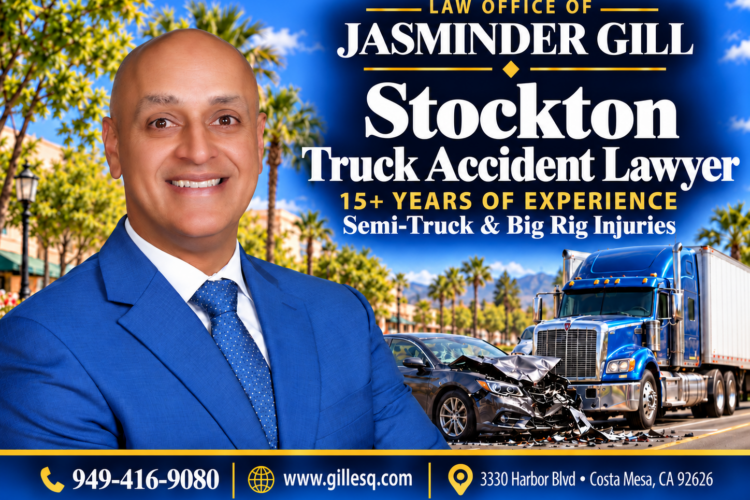
Experienced Legal Representation for People Injured in Semi-Truck, Big Rig and Commercial Vehicle Accidents on I-5 and Highway 99
A serious truck accident can leave you facing medical treatment, missed paychecks and insurance calls while the trucking company controls records that may explain what happened. The investigation may need to look beyond the driver to the equipment, shipment and businesses involved.
The Law Office of Jasminder Gill represents people injured in Stockton truck accidents, including motorists, passengers, professional truck drivers, motorcyclists, bicyclists and pedestrians. We also represent eligible families after fatal commercial vehicle collisions.
Attorney Jasminder Gill has practiced law in California since 2009. His personal injury practice has helped thousands of clients and recovered millions of dollars across different types of injury cases. Clients receive direct attorney access, Punjabi-speaking attorney communication and access to Spanish consultations. Our team includes Keagan, who holds a Commercial Driver’s License.
Call 949-416-9080 For A Free Stockton Truck Accident Consultation
Trucking company defense teams deploy immediately. Secure your immediate legal protection and freeze critical black box evidence today. There are no upfront attorney fees for accepted injury cases, and no attorney fee is owed unless compensation is recovered.
Click Here to 👉 🟢 Message Law Office of Jasminder Gill Directly on WhatsApp
ਸਟਾਕਟਨ ਵਿੱਚ ਟਰੱਕ ਹਾਦਸੇ ਤੋਂ ਬਾਅਦ ਪੰਜਾਬੀ ਵਿੱਚ ਵਕੀਲ ਨਾਲ ਗੱਲ ਕਰੋ
ਜੇ ਤੁਸੀਂ ਜਾਂ ਤੁਹਾਡੇ ਪਰਿਵਾਰ ਦਾ ਕੋਈ ਮੈਂਬਰ ਸਟਾਕਟਨ ਵਿੱਚ ਟਰੱਕ ਹਾਦਸੇ ਦੌਰਾਨ ਜ਼ਖ਼ਮੀ ਹੋਇਆ ਹੈ, ਤਾਂ ਵਕੀਲ ਜਸਮਿੰਦਰ ਗਿੱਲ ਨਾਲ ਪੰਜਾਬੀ ਵਿੱਚ ਆਪਣੀ ਗੱਲ ਸਮਝਾ ਸਕਦੇ ਹੋ। ਭਾਵੇਂ ਤੁਸੀਂ ਕਾਰ ਵਿੱਚ ਸੀ ਜਾਂ ਖ਼ੁਦ ਟਰੱਕ ਚਲਾ ਰਹੇ ਸੀ, ਹਾਦਸੇ, ਇਲਾਜ ਅਤੇ ਕੰਮ ਦੇ ਨੁਕਸਾਨ ਬਾਰੇ ਜਾਣਕਾਰੀ ਦੀ ਸਮੀਖਿਆ ਕੀਤੀ ਜਾ ਸਕਦੀ ਹੈ। ਮੁਫ਼ਤ ਕੇਸ ਸਮੀਖਿਆ ਲਈ 949-416-908
The CDL Advantage in Stockton Truck Accident Investigations
Practical knowledge of commercial driving helps identify questions a police report may leave unanswered. Our team’s CDL background informs the investigation of truck visibility, inspections, stopping considerations and trailer movement.
That operational knowledge supports the legal investigation. Technical opinions and calculations may require qualified accident reconstructionists, engineers or other experts.
Blind Spots and Unsafe Lane Changes
An insurer may argue that a smaller vehicle occupied a truck’s blind spot. That explanation does not resolve whether the truck driver used reasonable care before changing lanes.
Mirror configuration, available cameras, signaling, lane position and contact points may help establish which vehicle moved and when. Side-facing footage and scrape patterns can clarify vehicle movement, although they may not establish exactly where the driver looked.
Air-Brake Response and Following Distance
Commercial air brakes involve a response delay that must be considered alongside driver perception, reaction time and braking distance. Speed, cargo weight, roadway conditions and equipment condition also affect stopping performance.
A rear-end investigation may need to distinguish delayed driver response from inadequate following distance or a mechanical defect. Available vehicle data, maintenance records and inspection findings can help frame that analysis. A brake-switch signal alone does not measure braking force.
Wide Turns and Trailer Off-Tracking
A trailer’s rear wheels may follow a path inside the tractor’s front wheels during a turn. This movement, called off-tracking, matters when a truck turns beside an occupied vehicle, sidewalk or bicycle lane.
The investigation may examine the approach, signaling, lane position, clearance and trailer path. Intersection or commercial driveway footage can help explain whether the turn trapped or struck someone alongside the truck.
Stockton Freight Corridors and the Evidence They May Hold
A collision near a warehouse entrance raises different questions from a freeway pileup. Identifying the precise road, ramp, driveway or facility helps locate witnesses, recordings and transportation records.
I-5, Highway 99 and Highway 4
Freeway crashes may involve merging traffic, congestion, sudden slowdowns and several impacts. The direction of travel, nearby exit and lane can help narrow the investigation.
Final resting positions do not necessarily show how the collision began. Approach footage, damage patterns and independent witnesses may help distinguish the first impact from later contacts, particularly when a truck pushes one vehicle into another.
Arch Road and the Highway 99 Interchange
Arch Road connects freeway access with industrial properties and freight activity in southern Stockton. A collision near a ramp or delivery driveway may require examining turning movements, lane changes and the truck’s approach.
The exact entrance and approximate time can help identify nearby cameras, delivery appointments and witnesses. Destination records may also identify the carrier and shipment involved.
Navy Drive and Port of Stockton Access
For a collision on Navy Drive or near a Port of Stockton entrance, distinguish the public roadway from the gate, terminal or loading area. Different businesses may control evidence from each location.
A facility may hold entrance footage or gate records, the carrier may retain dispatch messages, and another business may control the equipment. Identifying those sources helps avoid relying solely on the police report.
BNSF Stockton Intermodal Facility
A trip connected with the BNSF Stockton Intermodal Facility may involve transfers among carriers, terminal operations and equipment providers.
Trailer and chassis numbers, pickup documents, interchange receipts and inspection records can help establish who supplied or controlled equipment. Participation in a shipment alone does not establish responsibility; the evidence must connect a business’s conduct or duties to the injury.
Agricultural Haulers and Construction Trucks in Stockton
Agricultural shipments, construction materials and bulk cargo present questions about the load as well as the vehicle. The truck’s configuration, departure point and destination can identify evidence beyond the driver’s account.
Agricultural Double-Trailers and Bulk Loads
When an agricultural truck loses its load, crosses a lane or overturns, the investigation may examine cargo distribution, loading practices, trailer condition and driver actions.
Scale tickets, loading records, shipment documents and photographs can help establish what was carried and how it was arranged. For double-trailer combinations, identifying each trailer and preserving connecting equipment may help investigate a separation or loss of control.
Dump Trucks and Construction Hauling
A dump truck accident may involve a construction entrance, backing maneuver or material spilled onto the roadway. Relevant questions include visibility, load containment, brake condition and the truck’s route through the site.
Dispatch instructions, weight records, maintenance documents and jobsite footage may help explain the collision. When several contractors participated, their actual responsibilities must be established.
Concrete Mixers and Rollover Investigations
A concrete mixer’s load and configuration can affect handling during turns or sudden maneuvers. An investigation may examine speed, steering, roadway geometry, equipment condition and the material being transported.
Batch tickets, delivery times, route information and available vehicle data can help reconstruct the trip. A rollover alone does not establish overloading or driver error; qualified analysis may be needed.
The First 72 Hours After a Stockton Truck Accident
Early review can help identify evidence before vehicles are repaired, recordings are overwritten or witnesses become difficult to locate. These priorities may overlap, and timing depends on when the firm is retained and the circumstances.
Hours 0–12: Identify Vehicles and Evidence Holders
The initial review focuses on the location, involved vehicles, investigating agency and businesses connected to the trip. Company names, USDOT numbers, license plates and trailer or chassis identifiers help distinguish the carrier from equipment owners.
Counsel can evaluate preservation notices identifying relevant equipment, electronic records and recordings. A notice communicates the preservation request; access and inspection may require further arrangements or legal procedures.
Hours 12–24: Locate Vehicle Data and Recordings
Potential sources include truck-mounted cameras, available Electronic Control Module data, GPS records and nearby surveillance.
Identifying the equipment and recording provider helps determine what may exist. Original files, footage before and after impact, and system timestamps can provide context missing from a short event clip.
Hours 24–48: Trace the Shipment and Equipment History
Dispatch messages, bills of lading, delivery appointments, gate records and equipment interchange receipts may connect the truck to a shipment or facility.
If a defect is suspected, repair invoices, inspection reports and driver complaints may identify earlier warnings. Planned repair, salvage or equipment return should be flagged so counsel can consider inspection before conditions change.
Hours 48–72: Compare Records and Document Losses
Driver logs, video, trip records and witness accounts can be compared to develop a clearer sequence. Apparent discrepancies require checking each source’s clock and meaning.
Medical treatment, work restrictions and missed earnings also need documentation. Company drivers should retain pay statements and schedules. Owner-operators should preserve settlement statements, operating expenses and canceled-work records.
If your accident happened more than 72 hours ago, you should still request a case evaluation. Useful evidence may remain available. Missing documents should not prevent an initial call.
Truck Drivers Injured by Another Driver or Business
Truck drivers can suffer serious head, neck, spine and shoulder injuries inside the cab. A collision may interrupt a driving career even when visible damage initially appears limited.
Our firm evaluates third-party injury cases for company drivers and owner-operators injured by another motorist, a separate carrier or another responsible business. Examples include unsafe merges, rear-end impacts and backing collisions at delivery facilities.
Records from both vehicles may matter. One camera may miss the initial movement while another captures it.
Work Injuries and Third-Party Cases
An accident during work may raise workers’ compensation issues as well as a personal injury case against a third party. Employment relationships, benefits and possible reimbursement obligations require individual review.
Our firm handles personal injury cases and does not handle workers’ compensation representation. Separate workers’ compensation counsel may be needed. Workplace benefits do not necessarily eliminate a supported case against another responsible party.
Lost Earnings for Company Drivers and Owner-Operators
Company drivers may document missed earnings through pay statements, schedules and medical restrictions. Owner-operators may need tax returns, settlement statements, trip records, operating expenses and evidence of canceled work.
Gross freight revenue is not automatically lost personal income. A supported calculation distinguishes injury-related earnings losses from vehicle downtime, continuing expenses and costs avoided while the truck was out of service. Replacement-driver expenses may require separate consideration.
Lasting restrictions should be compared with actual job demands: prolonged sitting, climbing into the cab, inspecting equipment and handling freight. Medical and vocational evidence may help establish reduced earning capacity.
Port-Related Equipment, Chassis and Container Responsibility
The tractor, chassis and shipping container may be supplied or controlled by different businesses. A chassis—the wheeled equipment supporting a container—can have a maintenance history separate from the tractor.
When equipment failure is suspected, the name on the cab may not identify every relevant business. The investigation may need to establish who supplied, inspected, maintained and accepted the equipment.
Equipment Interchange Receipts
An Equipment Interchange Receipt may document a transfer and reported equipment condition. Comparing it with photographs, repair invoices and driver communications can help establish when a problem was reported and who handled the equipment afterward.
A notation should be checked against physical evidence rather than treated as conclusive proof of when a defect arose.
Inspection Before Repair or Disposal
Repair or disposal can change evidence of brake defects, tire failures, damaged connections or securement problems. Counsel can evaluate whether components should be preserved for qualified inspection.
Ownership alone does not establish fault. Applicable duties, maintenance agreements and each party’s conduct also require examination.
Evidence for Different Commercial Truck Collisions
Rear-End and Chain-Reaction Crashes
Approach footage, witness accounts and available operating data may establish when traffic slowed and how the truck responded. Separate impacts can have different causes.
Preserve original dashcam recordings and distinguish what you personally saw or felt from information learned afterward.
Turning, Underride and Side-Impact Crashes
The investigation may examine when a turn began, how long the trailer occupied the roadway and what approaching road users could see.
Lighting, reflective markings, sight obstructions, signal information and damage patterns may matter. A visible traffic camera should not be assumed to record or retain footage.
Jackknife, Rollover and Cargo-Spill Accidents
Braking, steering, tires, cargo distribution, securement and roadway conditions may need to be evaluated together.
Loading documents, weight tickets and inspection findings provide leads. Physical examination and qualified analysis may be needed to connect those conditions to the collision.
Delivery Truck and Backing Accidents
Amazon-related deliveries, FedEx operations, UPS vehicles and local delivery companies can involve different employment and contracting arrangements. Branding alone does not establish who employed the driver or controlled the vehicle.
Route records, delivery instructions, backing procedures, cameras and site visibility may help explain what happened near homes, businesses and loading areas.
Fleet Cameras, Electronic Truck Data and Safety Warnings
ECM data, electronic logging device records, GPS information and camera recordings serve different purposes. They should not be treated as interchangeable or assumed to contain a complete reconstruction.
Speed, Braking and Event Information
Some systems retain speed samples, brake-switch status or information triggered by sudden deceleration. Interpretation requires checking recording intervals, triggers, units and whether the event corresponds to the collision.
Vehicle data should be compared with video, roadway evidence and equipment findings.
Road-Facing and Driver-Facing Cameras
Available footage depends on installed equipment, recording settings and retention practices. Road-facing cameras may show traffic movement, while driver-facing footage may provide a different part of the sequence.
An automated alert should be evaluated alongside the underlying recording. Footage before and after impact can be more informative than an isolated event clip.
Camera Clocks and Diagnostic Codes
An apparent conflict between video, GPS and dispatch records may result from different clocks or time zones. Reliable analysis establishes a common timeline.
A diagnostic trouble code may identify a condition requiring examination without proving it caused the crash. Timing, manufacturer information and inspection findings affect its significance.
Earlier Company Warnings
Relevant coaching records, driver complaints, safety reviews and equipment reports may help establish whether the carrier knew of a concern connected to the collision.
The investigation should examine both the warning and the company’s response.
Driver Logs, Dispatch Instructions and Conflicting Records
An electronic log may show off-duty time while a gate record appears to show activity. That difference deserves examination, but it does not automatically establish falsification. Another person may have handled the delivery, or the records may describe different events.
Useful comparisons include:
- Driving records against delivery appointments.
- GPS information against gate entries.
- Defect reports against repair invoices.
- Camera footage against accounts of lane movement.
- Dispatch instructions against the actual trip sequence.
Applicable hours-of-service and maintenance requirements depend on the operation and relevant exceptions. A violation must be connected to the collision and injury.
Tule Fog and Reduced Visibility on Stockton Truck Routes
After a collision in fog, the investigation should examine how the commercial driver responded. Federal rules require extreme caution and reduced speed when visibility or traction is impaired. When conditions become sufficiently dangerous, commercial vehicle operation must be discontinued until it can resume safely.
For a crash on I-5, Highway 99 or another Stockton-area route, relevant evidence may include visibility information, traffic conditions, truck speed, following distance, recordings and dispatch communications.
When did visibility deteriorate? What could the driver see? Was the truck’s speed appropriate? Did the carrier receive reports of dangerous conditions along the route?
Fog alone does not establish fault or excuse a collision. The evidence must show how the driver’s actions and other contributing conditions affected what happened.
Identifying Responsible Businesses and Insurance
Potentially responsible parties may include the driver, motor carrier, employer, equipment provider, maintenance business, cargo loader, manufacturer, another motorist or a public entity.
Contracts, leases, registration, equipment numbers and shipment documents can help identify their relationships. A broker or logistics company’s role may require separate legal analysis, including applicable federal preemption issues. A name in the paperwork does not automatically establish responsibility.
Available coverage may include primary and excess policies associated with different businesses. Policy terms, responsible parties and competing demands affect recovery. Commercial vehicle involvement does not guarantee a particular settlement.
What to Do After a Stockton Truck Accident
Your health comes first. Do not delay treatment or enter an unsafe area to collect evidence.
Get Medical Care
Call 911 when emergency assistance is needed. Follow medical advice and describe symptoms accurately, including when they began. Stay away from spilled cargo, traffic and unstable equipment.
Identify Each Vehicle
If safe, photograph company names, USDOT numbers, license plates and tractor and trailer numbers. The tractor and trailer may belong to different businesses.
Record the Exact Location
Note the direction of travel, exit, lane, intersection or facility entrance. “Highway 99 near Arch Road” is a starting point; a specific ramp or driveway may help locate evidence.
Preserve Originals and Witness Information
Keep original recordings, photographs and witness contact details. Avoid relying only on screenshots or edited clips. Tell your attorney promptly about nearby cameras.
Confirm the Investigating Agency
Keep the officer’s information and report number. Follow the actual investigating agency’s procedures. Photographs, recordings and inspection materials may require requests separate from the collision report.
Keep Medical, Work and Insurance Documents
Save treatment records, work restrictions, receipts and insurance correspondence. Preserve available wage and business records without waiting until every document is collected.
Flag Planned Repairs or Disposal
Tell your attorney if a relevant vehicle or component is scheduled for repair, salvage, return or disposal. Do not disassemble equipment, alter files or bypass account restrictions yourself.
Preserving Trucking Evidence Held by Other Businesses
A carrier, equipment owner, facility operator or technology provider may control evidence an injured person cannot obtain directly.
A preservation notice, sometimes called a spoliation letter, identifies evidence relevant parties should retain. It does not automatically freeze systems, obtain records or guarantee preservation. Access may require discovery, subpoenas, inspection agreements or a court order.
Different records have different retention periods. A pending insurance claim or police investigation should not be assumed to preserve footage, vehicle data or physical equipment.
Serious Injuries and Compensation
Truck accidents can cause brain injuries, spinal injuries, fractures, internal injuries, burns and lasting orthopedic problems. Evaluating the case means examining diagnosis, treatment, prognosis and effects on daily life.
Be accurate about prior conditions and explain what changed after the collision. Medical findings and treatment history can help assess accident-related aggravation.
Depending on the evidence and law, compensation may include:
- Medical expenses and future care.
- Lost earnings and reduced earning capacity.
- Pain and emotional distress.
- Disability and loss of enjoyment of life.
Future losses require appropriate support. Medical liens, reimbursement obligations, attorney fees and case costs may affect the amount ultimately distributed.
Responding When an Insurer Blames You
An insurer may argue that you stopped unexpectedly, occupied a blind spot or moved into the truck’s lane. Those allegations should be compared with recordings, physical evidence and independent accounts.
California comparative-fault principles generally allow recovery reduced by an injured person’s share of responsibility. An insurer’s initial position is not a court determination, and a police report does not conclusively decide civil liability.
Send correspondence to your attorney promptly. Understand statement requests, authorizations and releases before agreeing to them. Your own policy may impose separate reporting and cooperation duties.
Fatal Truck Collisions and Filing Deadlines
Eligible survivors may pursue wrongful death damages after a fatal truck crash. A related survival action concerns claims belonging to the estate and follows separate rules.
California law generally provides two years for personal injury and wrongful death lawsuits, subject to accrual rules and exceptions. Claims involving a California public entity generally require injury or death claim presentation within six months, followed by separate lawsuit requirements.
Do not assume treatment, negotiations or a pending investigation extend a deadline. Evidence may require attention much sooner.
Representation for Stockton Truck Accident Victims in San Joaquin County and Throughout California
The Law Office of Jasminder Gill represents people injured in commercial truck accidents in Stockton, San Joaquin County and throughout California. Our office is located at 3330 Harbor Blvd. Floor 2, Costa Mesa, CA 92626 and clients can request a case evaluation and handle routine communication by phone, video and electronic document exchange without traveling to Orange County.
The appropriate court depends on the collision, the parties and applicable jurisdiction and venue rules. A Stockton truck accident lawsuit may proceed in the Superior Court of California, County of San Joaquin. Cases involving federal jurisdiction may proceed in the U.S. District Court for the Eastern District of California. An out-of-state trucking company’s involvement does not automatically prevent a California lawsuit.
Equipment inspections, depositions, medical evaluations and court appearances are coordinated according to the needs of the case. Our team explains what requires your participation and helps you prepare while you focus on recovery.
Call 949-416-9080 for a Free Stockton Truck Accident Case Evaluation
Tell our team where the collision happened, which vehicles were involved and what injuries you suffered. Photographs, a report number and insurance correspondence are helpful, but missing paperwork should not prevent an initial inquiry. Our intake team gathers information for attorney review and explains the next steps if the firm accepts your case.
Jasminder Gill speaks Punjabi, and Spanish consultations are available. No upfront attorney fees. No attorney fee unless compensation is recovered. Case costs are separate and governed by the written retainer.