
Santa Rosa Punjabi Car Accident Lawyer
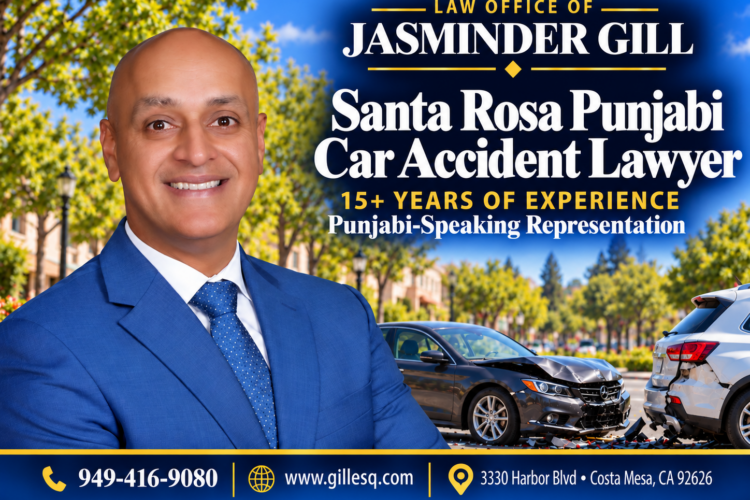
Santa Rosa Car Accident Legal Services for Rear-End Collisions, Hit-and-Runs and Uninsured Motorist Claims
A car accident in Santa Rosa can create problems that extend far beyond the damaged vehicle. One moment, someone may be driving to work, picking up children, visiting relatives, or traveling through Sonoma County. The next, that person may be dealing with emergency medical treatment, missed paychecks, insurance questions, and uncertainty about recovering financially.
For Punjabi-speaking individuals and families, the situation can become particularly frustrating when important insurance decisions and medical conversations take place entirely in English. Understanding the words used by an adjuster does not always mean understanding the legal consequences of what the adjuster is requesting.
The Law Office of Jasminder Gill represents people injured in California motor vehicle accidents, including Punjabi-speaking individuals in Santa Rosa and surrounding Sonoma County communities.
Call 949-416-9080 For A Free Santa Rosa Car Accident Consultation
Attorney Jasminder Gill has been licensed to practice law in California since 2009. With more than 15 years of legal experience, he provides direct communication in Punjabi and English to help clients understand their rights, insurance claims, medical expenses, and potential compensation.
Our firm assists individuals injured in rear-end collisions, freeway crashes, intersection accidents, rideshare incidents, hit-and-run collisions, and accidents involving drivers without sufficient insurance.
Click Here to Message Us on WhatsApp
ਪੰਜਾਬੀ ਵਿੱਚ ਕਾਰ ਐਕਸੀਡੈਂਟ ਦੇ ਕੇਸਾਂ ਲਈ ਕਾਨੂੰਨੀ ਮਦਦ
ਜੇ ਤੁਸੀਂ ਸੈਂਟਾ ਰੋਜ਼ਾ ਜਾਂ ਸੋਨੋਮਾ ਕਾਊਂਟੀ ਵਿੱਚ ਕਾਰ ਐਕਸੀਡੈਂਟ ਦੌਰਾਨ ਜ਼ਖਮੀ ਹੋਏ ਹੋ, ਤਾਂ ਆਪਣੇ ਕਾਨੂੰਨੀ ਹੱਕਾਂ ਬਾਰੇ ਜਾਣਕਾਰੀ ਲੈਣਾ ਜ਼ਰੂਰੀ ਹੈ।
ਕਾਰ ਐਕਸੀਡੈਂਟ ਤੋਂ ਬਾਅਦ ਹਸਪਤਾਲ ਦੇ ਬਿੱਲ, ਕੰਮ ਤੋਂ ਛੁੱਟੀ, ਗੱਡੀ ਦਾ ਨੁਕਸਾਨ ਅਤੇ ਇੰਸ਼ੋਰੈਂਸ ਕੰਪਨੀ ਨਾਲ ਗੱਲਬਾਤ ਕਰਨੀ ਔਖੀ ਹੋ ਸਕਦੀ ਹੈ।
ਅਟਾਰਨੀ ਜਸਮਿੰਦਰ ਗਿੱਲ ਪੰਜਾਬੀ ਵਿੱਚ ਸਿੱਧੀ ਗੱਲਬਾਤ ਕਰਦੇ ਹਨ।
ਸਾਡਾ ਦਫ਼ਤਰ ਪਿਛੋਂ ਗੱਡੀ ਵੱਜਣ, ਹਾਈਵੇਅ ਉੱਤੇ ਟੱਕਰ, ਚੌਰਾਹੇ ਦੇ ਐਕਸੀਡੈਂਟ, ਹਿੱਟ ਐਂਡ ਰਨ ਅਤੇ ਬਿਨਾਂ ਇੰਸ਼ੋਰੈਂਸ ਵਾਲੇ ਡਰਾਈਵਰਾਂ ਨਾਲ ਹੋਏ ਹਾਦਸਿਆਂ ਦੇ ਕੇਸਾਂ ਵਿੱਚ ਕਾਨੂੰਨੀ ਸਹਾਇਤਾ ਪ੍ਰਦਾਨ ਕਰਦਾ ਹੈ।
ਜੇ ਐਕਸੀਡੈਂਟ ਤੋਂ ਬਾਅਦ ਤੁਹਾਡੀ ਗਰਦਨ, ਪਿੱਠ, ਮੋਢੇ, ਸਿਰ ਜਾਂ ਸਰੀਰ ਦੇ ਕਿਸੇ ਹੋਰ ਹਿੱਸੇ ਵਿੱਚ ਦਰਦ ਹੈ, ਤਾਂ ਡਾਕਟਰ ਤੋਂ ਜਾਂਚ ਕਰਵਾਉਣੀ ਮਹੱਤਵਪੂਰਨ ਹੈ।
ਇੰਸ਼ੋਰੈਂਸ ਕੰਪਨੀ ਨਾਲ ਸਮਝੌਤੇ ਉੱਤੇ ਦਸਤਖ਼ਤ ਕਰਨ ਤੋਂ ਪਹਿਲਾਂ ਆਪਣੇ ਹੱਕਾਂ ਬਾਰੇ ਜਾਣੋ।
ਮੁਫ਼ਤ ਸਲਾਹ ਲਈ 949-416-9080 ਉੱਤੇ ਫ਼ੋਨ ਕਰੋ।
Why Santa Rosa Car Accidents Require Attention to Local Road Conditions
Santa Rosa is the largest city in Sonoma County and serves as a transportation center for communities throughout the North Bay. Its road network combines heavily traveled highways, commercial streets, residential neighborhoods, and routes connecting agricultural and wine-producing areas.
These different environments create a wide range of accident circumstances.
A collision on a freeway may involve sudden braking, high speeds, or merging traffic. An accident near a shopping center may involve a driver making an unsafe turn across several lanes. A residential collision may happen when a motorist fails to notice a vehicle approaching an intersection.
Santa Rosa’s driving environment also changes throughout the day.
Morning commuters travel toward employment centers, schools, and Highway 101. Afternoon traffic brings increased activity around businesses, medical offices, and educational institutions. Evening driving can involve reduced visibility, tired drivers, and changing weather conditions.
These circumstances matter because liability depends on what happened before the vehicles collided.
An injury claim may require determining whether a driver was speeding, distracted, following too closely, improperly changing lanes, or failing to yield.
A thorough investigation looks beyond the fact that a collision occurred. It examines how the driver’s decisions contributed to the accident and whether those decisions violated the duty to operate a vehicle safely.
Highway 101 Accidents in Santa Rosa
Highway 101 is a major north-south transportation corridor through Santa Rosa. Drivers use it to travel between local neighborhoods, neighboring Sonoma County communities, Marin County, and destinations farther north.
Traffic conditions can change rapidly near freeway entrances and exits.
A driver entering the freeway may struggle to merge safely into moving traffic. Another driver may unexpectedly brake when approaching congestion. Vehicles traveling in adjacent lanes can collide when motorists attempt sudden lane changes.
Highway collisions may involve:
- Rear-end crashes during stop-and-go traffic
- Unsafe lane changes
- Side-impact accidents during merging
- Multiple-vehicle collisions
- Speed-related crashes
- Distracted drivers who fail to recognize slowing traffic
- Vehicles striking barriers or other roadway objects
The physical damage caused by a freeway accident does not always reveal the complete nature of the resulting injuries.
Some individuals walk away from the collision scene but develop worsening neck pain, back symptoms, dizziness, or headaches afterward.
Others require immediate ambulance transportation because of fractures, head injuries, or significant trauma.
Evidence from freeway accidents can disappear quickly. Damaged vehicles may be moved, debris cleared, and witnesses may continue to their destinations.
Photographs, traffic collision reports, witness information, and available video recordings can become important when reconstructing what happened.
An attorney may also investigate whether more than one driver contributed to a chain-reaction collision.
Highway 12 and East-West Traffic Collisions
State Route 12 provides an important east-west connection through Santa Rosa and surrounding areas.
Drivers encounter a combination of freeway-style sections, intersections, commercial access points, and connecting roads.
An accident involving a vehicle entering Highway 12 may raise different liability questions than a collision occurring at a surface-street intersection.
For example, a motorist may incorrectly judge the speed of approaching traffic while making a turn. A driver already traveling through an intersection may be struck by someone who fails to obey a traffic signal.
Depending on the circumstances, investigators may examine signal timing, turning movements, lane assignments, road markings, and the locations of vehicle damage.
In more complicated accidents, an engineering or accident reconstruction expert may be needed to evaluate conflicting accounts.
The key question is not simply which driver says the other person caused the crash. It is what the available evidence establishes about each person’s conduct.
Santa Rosa Avenue, Mendocino Avenue, and Busy Commercial Corridors
Car accidents do not need to occur at freeway speeds to produce significant injuries.
Santa Rosa Avenue and Mendocino Avenue carry traffic through commercial and residential areas where motorists regularly encounter turning vehicles, pedestrians, bicyclists, and drivers entering from parking lots.
On busy streets, one driver’s hesitation or unexpected movement can quickly affect surrounding vehicles.
Consider a collision involving a motorist exiting a business driveway. The driver may look in one direction but fail to recognize traffic approaching from the other.
Another common scenario involves a left-turning driver who misjudges an approaching vehicle’s speed.
These accidents can raise questions about right-of-way, visibility, roadway design, and whether either driver had sufficient opportunity to avoid the collision.
Other Santa Rosa corridors where individual accident circumstances may warrant investigation include College Avenue, Steele Lane, Guerneville Road, Sebastopol Road, and Stony Point Road.
The presence of an accident on a particular roadway does not automatically establish negligence. Every claim requires examination of the specific facts.
Rear-End Collisions and Injuries That Appear Later
Rear-end collisions are frequently treated as straightforward insurance claims. However, the medical consequences and liability questions are not always simple.
A driver stopped at a red light may be struck from behind by another motorist who is looking at a phone, traveling too fast, or following too closely.
The sudden impact can cause the occupant’s body to move sharply against the seat belt and head restraint.
Even when a vehicle remains drivable, an occupant may experience substantial discomfort.
Common complaints include neck stiffness, shoulder pain, headaches, back pain, and difficulty turning the head.
Some symptoms become more noticeable the following morning, after inflammation and muscle tension develop.
A person who initially declines an ambulance should not assume that later symptoms are unimportant.
Seeking appropriate medical evaluation allows healthcare professionals to assess the injury and document the patient’s complaints.
Insurance companies may question delayed treatment, particularly when there is a significant gap between the collision and the first medical appointment.
Accurate medical documentation can help clarify when symptoms began, how they progressed, and whether treatment was recommended.
A rear-end accident claim should be evaluated based on the complete evidence, not merely the appearance of the vehicle’s bumper.
T-Bone Accidents and Dangerous Turning Decisions
Side-impact collisions can cause severe injuries because the occupants may have less structural protection between their bodies and the striking vehicle.
A T-bone accident may occur when a driver runs a red light, ignores a stop sign, or turns in front of an approaching vehicle.
The direction of impact can be particularly important.
A vehicle striking the driver’s side may expose the driver to different injury forces than one striking the passenger side.
Potential injuries include rib fractures, shoulder injuries, pelvic injuries, head trauma, and damage to the spine.
When two drivers disagree about who had the green light, independent evidence becomes especially valuable.
Nearby surveillance cameras, dashboard recordings, witnesses, and vehicle information may help resolve competing accounts.
In some cases, the precise point of impact and the movement of both vehicles can establish whether a driver entered an intersection improperly.
An injured passenger may also have a claim even when the drivers disagree about responsibility.
Drunk Driving, Distracted Driving, and Preventable Collisions
Many serious collisions involve conduct that could have been avoided through reasonable care.
Drivers who use mobile phones, drive while intoxicated, disregard traffic signals, or operate vehicles while dangerously fatigued create risks for everyone sharing the roadway.
Distracted driving is not limited to texting.
A motorist can become distracted while operating navigation equipment, reaching for an object, or focusing on something outside the vehicle.
Alcohol and drug impairment may affect reaction time, coordination, perception, and judgment.
When a collision involves suspected impairment, police investigations and other available evidence may become significant.
A criminal investigation and a civil injury claim are separate proceedings.
A criminal case addresses potential violations of criminal law, while a civil case seeks compensation for injuries and losses caused by legally responsible parties.
Depending on the facts and applicable California law, particularly egregious conduct may also raise questions about punitive damages.
Punitive damages are not automatic and require a separate legal analysis.
Accidents Involving Uninsured and Underinsured Drivers
One of the most frustrating experiences for an injured motorist is discovering that the driver who caused the accident has little or no liability insurance.
The injured individual may have substantial medical expenses and lost income without an obvious source of sufficient compensation.
California drivers may purchase uninsured motorist and underinsured motorist coverage as part of their own automobile insurance policies.
Uninsured motorist coverage may apply when a responsible driver has no applicable liability insurance or in certain qualifying hit-and-run circumstances.
Underinsured motorist coverage may provide additional protection when the responsible driver’s available liability limits are insufficient, subject to policy terms and applicable California law.
These claims can involve requirements that are easy to overlook.
Insurance companies may request documentation concerning the other driver’s coverage, liability findings, medical treatment, and available settlement proceeds.
An injured person should understand the applicable insurance conditions before signing a release or accepting a settlement.
Even when a claim is submitted to the injured person’s own insurer, disagreements may arise over the severity of injuries or the amount of compensation.
Hit-and-Run Accidents in Santa Rosa
A driver who leaves the scene of a collision can create immediate difficulties for injured occupants.
The victim may be unable to identify the vehicle, obtain insurance information, or determine who was operating it.
After a hit-and-run accident, documenting every available detail can be important.
Witnesses may remember the vehicle’s color, make, direction of travel, or a portion of its license plate.
Nearby businesses or residences may have cameras that recorded the collision or the vehicle leaving the area.
The injured person’s own insurance policy may also contain potentially applicable protections.
However, hit-and-run coverage may depend on policy language and specific requirements, including reporting and evidence conditions.
Preserving information promptly can help prevent useful evidence from being lost.
An attorney can evaluate whether an unidentified driver, an identified vehicle owner, or an applicable insurance policy may provide a possible avenue for recovery.
Medical Injuries and the Long-Term Impact on Everyday Life
An automobile accident can affect nearly every part of an injured person’s routine.
Someone who previously worked full-time may suddenly struggle with lifting, standing, bending, or driving.
A parent may have difficulty caring for children. An older adult may experience reduced independence. A self-employed individual may lose income while attending medical appointments.
The seriousness of an injury is not determined solely by whether surgery was required.
Some accident victims recover after a relatively brief course of care. Others experience persistent symptoms that interfere with daily responsibilities.
Neck, Back, and Spinal Injuries
Neck and back injuries may involve muscles, ligaments, discs, joints, or nerves.
Depending on the condition, a physician may recommend physical therapy, medication, diagnostic imaging, injections, or consultation with a specialist.
A herniated disc does not automatically establish that an accident caused the condition.
Medical providers may need to evaluate prior history, symptom onset, examination findings, and imaging results.
When an accident aggravates a preexisting condition, the relationship between the collision and the worsening symptoms may become an important issue.
Concussions and Head Injuries
A person can suffer a concussion without experiencing a prolonged loss of consciousness.
Symptoms may include headaches, dizziness, nausea, memory problems, sensitivity to light, and difficulty concentrating.
Persistent symptoms can affect employment, school attendance, and ordinary household activities.
Head injuries should be evaluated by qualified medical professionals, particularly when symptoms worsen or new neurological problems appear.
Shoulder, Knee, and Joint Injuries
Joint injuries may occur when occupants strike the interior of a vehicle or experience sudden twisting forces.
The resulting conditions can interfere with walking, reaching, driving, and physical work.
Some injuries respond to conservative treatment, while others require specialist evaluation or surgery.
Medical records can help explain how the injury affected the person’s ability to perform previously routine tasks.
Lost Income and the Financial Pressure Following a Crash
For many families, missed employment creates immediate financial strain.
An injured worker may be unable to return to a job requiring physical activity. A driver, warehouse employee, construction worker, healthcare worker, or restaurant employee may have difficulty performing regular duties while recovering.
Even individuals with less physically demanding jobs may struggle because of pain, headaches, medication effects, or medical appointments.
Lost income claims generally require supporting documentation.
Pay statements, tax records, employment schedules, disability notes, and employer communications may help establish the financial consequences.
For self-employed individuals, lost income can be more complicated.
A business owner may need to demonstrate canceled work, reduced revenue, missed contracts, or other measurable losses attributable to the injury.
When serious injuries permanently affect earning capacity, additional analysis may be necessary to estimate future financial harm.
The amount recoverable depends on the evidence, legal rules, and circumstances of the individual case.
When the Insurance Company Offers a Quick Settlement
An insurance adjuster may contact an injured person shortly after the collision.
The adjuster may request a recorded statement, ask about medical treatment, or offer money to resolve the claim.
An early settlement can appear attractive when vehicle repairs and household bills are already creating financial pressure.
However, the injured person may not yet know the full extent of the medical condition.
Accepting a settlement involving a broad release may prevent additional recovery for injuries covered by that release.
Before settling, it is important to understand the available medical information, outstanding bills, potential future treatment, and the scope of the proposed release.
Insurance companies also evaluate claims using information that may not fully reflect the injured person’s circumstances.
For example, an adjuster may focus heavily on the cost of vehicle repairs while questioning the relationship between the collision and reported symptoms.
A properly documented claim can present medical findings, treatment history, employment consequences, and other relevant evidence.
No attorney can guarantee that an insurer will accept a particular valuation, but careful preparation can help identify the issues that matter.
How Compensation May Be Evaluated in a Santa Rosa Car Accident Claim
California personal injury claims may involve economic and noneconomic damages.
Economic damages are financial losses that can be supported through bills, records, and other documentation.
These may include medical expenses, qualifying future treatment costs, lost wages, diminished earning capacity, and other accident-related financial losses.
Noneconomic damages concern the personal consequences of an injury.
Depending on the circumstances, these may include physical pain, emotional suffering, inconvenience, and loss of enjoyment of normal activities.
There is no universal settlement amount for every rear-end collision, fractured bone, or spinal injury.
Two people involved in similar accidents may have very different medical outcomes.
One individual may recover quickly, while another may require extensive treatment and experience lasting limitations.
Case value also depends on liability, the strength of medical evidence, applicable insurance coverage, and other legal or factual issues.
A responsible evaluation considers both the measurable financial losses and the individual impact of the injury.
What Happens When Both Drivers Share Responsibility?
A driver does not necessarily lose the right to compensation simply because another party argues that the injured driver contributed to the collision.
California generally follows a pure comparative negligence system.
Under this system, an injured person’s compensation may be reduced by the percentage of fault attributed to that person.
For example, if an individual’s legally established damages total $100,000 and that individual is found 20 percent responsible, the damages attributable to the other party’s fault would generally be $80,000 before considering other applicable adjustments or limits.
Fault allocation can be disputed.
One driver may have been speeding while another made an improper turn. An investigation may be necessary to determine how both actions contributed to the collision.
Insurance allegations of shared responsibility should be examined against the evidence rather than accepted automatically.
Punjabi-Language Legal Representation for Santa Rosa Families
Understanding legal terminology can be challenging even for people who speak English fluently.
For someone who is more comfortable communicating in Punjabi, insurance discussions may become especially difficult when they involve technical subjects such as liability coverage, medical liens, comparative negligence, or settlement releases.
A Punjabi-speaking attorney can explain the meaning of these issues directly.
That communication can help clients ask questions about medical treatment, share details about symptoms, and understand the consequences of important claim decisions.
Families may also want clarification about what information is needed from employers, healthcare providers, or insurance companies.
At the Law Office of Jasminder Gill, Punjabi-speaking clients can communicate directly with attorney Jasminder Gill in Punjabi.
Clients do not have to depend solely on relatives to explain complicated legal subjects.
Direct communication can also reduce misunderstandings about what happened in the collision and how the resulting injuries have affected everyday life.
Our firm understands that every family has different communication needs, and important decisions deserve clear explanations.
Car Accident Claims Involving Passengers and Visiting Family Members
Not everyone injured in a Santa Rosa collision owns the vehicle involved.
Passengers may be riding with friends, relatives, coworkers, or rideshare drivers when an accident occurs.
A passenger generally has the right to pursue compensation from a legally responsible party, subject to the circumstances and applicable law.
In some cases, liability may involve the driver of the vehicle carrying the passenger. In others, another motorist may be responsible.
Multiple insurance policies may need to be evaluated when different drivers contributed to the collision.
Visiting relatives can face additional logistical difficulties if they live outside Sonoma County or outside California.
They may return home before treatment is completed or before an insurance investigation concludes.
Maintaining accurate contact information, preserving medical documentation, and understanding possible insurance requirements can be important in these cases.
An attorney can help evaluate the responsible parties and available insurance coverage.
Rideshare Accidents Involving Uber and Lyft
Rideshare transportation presents additional insurance questions.
A collision may involve a rideshare passenger, the rideshare driver, another motorist, or a pedestrian.
The available coverage can depend partly on what the rideshare driver was doing when the collision occurred.
For example, the insurance situation may differ when the driver is waiting for a ride request compared with actively transporting a passenger.
An investigation may require reviewing trip details, available app records, insurance information, and the circumstances of the collision.
Injured passengers should preserve ride receipts and trip information when available.
The presence of a rideshare company does not automatically establish liability or guarantee a particular amount of insurance coverage.
Each claim requires an evaluation of the driver’s status, the responsible parties, and the applicable policies.
Why Accident Documentation Can Make a Difference
A strong personal injury claim often depends on information gathered before memories fade and documents become difficult to obtain.
Collision photographs may show vehicle positions, damage, road conditions, and nearby signs.
Witness statements may help clarify traffic signals or turning movements.
Medical records can establish reported symptoms, examination findings, diagnostic testing, and treatment recommendations.
Employment documents may help demonstrate lost earnings.
Sometimes an insurance dispute arises because different pieces of evidence appear inconsistent.
A driver may describe a severe impact while an insurer characterizes the visible damage as minor. Medical records may contain incomplete descriptions of symptoms or a delay in treatment.
Identifying these issues early provides an opportunity to understand what additional evidence may be available.
Accurate records are particularly important when an injured person has a prior medical condition that an insurer may claim explains the current symptoms.
The objective is to present a complete, supportable account of what happened and how the injury affected the person.
California Deadlines for Filing a Car Accident Injury Claim
California generally provides two years from the date of injury to file a personal injury lawsuit, although exceptions and different rules may apply.
Certain claims involving government agencies have substantially shorter deadlines.
For many personal injury claims against a California public entity, a government claim must generally be presented within six months of the incident.
Additional deadlines may apply after the agency responds.
These rules can become important when a collision involves a government vehicle, an allegedly dangerous public roadway, or another potentially responsible public entity.
The existence of an insurance claim does not necessarily extend the deadline for filing a lawsuit.
Because the applicable deadline depends on the specific facts, injured individuals should seek legal guidance promptly rather than assume they have the full two years available.
Representing Injured Drivers Throughout Santa Rosa and Sonoma County
Car accident injuries affect individuals throughout Santa Rosa, whether they live near downtown, travel regularly through Highway 101, or commute between neighboring communities.
Our firm assists California accident victims, including individuals from Santa Rosa, Rohnert Park, Windsor, Sebastopol, Cotati, Petaluma, and other Sonoma County locations.
Representation is not limited to accidents occurring near a particular neighborhood or roadway.
A collision may happen during an ordinary local errand or while traveling across California.
The important considerations are the circumstances of the accident, the responsible parties, the injuries sustained, and the potential legal remedies.
Punjabi-speaking individuals can discuss these matters directly with attorney Jasminder Gill.
Why Choose the Law Office of Jasminder Gill?
The Law Office of Jasminder Gill focuses on representing injured individuals rather than insurance companies.
Attorney Jasminder Gill has practiced law in California since 2009 and brings more than 15 years of legal experience to personal injury matters.
The firm has helped thousands of clients and recovered millions of dollars for clients across its practice.
Clients receive direct access to a Punjabi-speaking attorney who can explain their legal options without requiring communication through an unfamiliar language.
Our firm evaluates car accident cases involving disputed fault, significant medical treatment, uninsured drivers, commercial vehicles, and other complications.
We offer free consultations and handle qualifying personal injury matters on a contingency-fee basis.
There are no upfront attorney fees, and attorney fees are payable only if compensation is recovered, subject to the written fee agreement. Case costs are addressed in that agreement.
Every accident is different, and past results do not guarantee a particular outcome.
Call 949-416-9080 For A Free Santa Rosa Car Accident Case Evaluation
If you or a family member has been injured in a Santa Rosa automobile collision, you deserve clear information about your legal rights and potential options for compensation.
Whether the accident occurred on Highway 101, Highway 12, Santa Rosa Avenue, Mendocino Avenue, or another Sonoma County roadway, the circumstances of the collision and the resulting injuries deserve careful consideration.