Sacramento Punjabi Truck Accident Lawyer
Experienced Sacramento Punjabi Truck Accident Lawyer | Semi-Truck & Big Rig Injury Claims
A commercial truck crash in Sacramento may involve a freeway connection, a regional delivery, a construction vehicle, or a truck moving through city traffic. The consequences can be immediate: hospitalization, a vehicle that cannot be driven, lost income, and an insurer asking for a statement before the injured person understands the diagnosis.
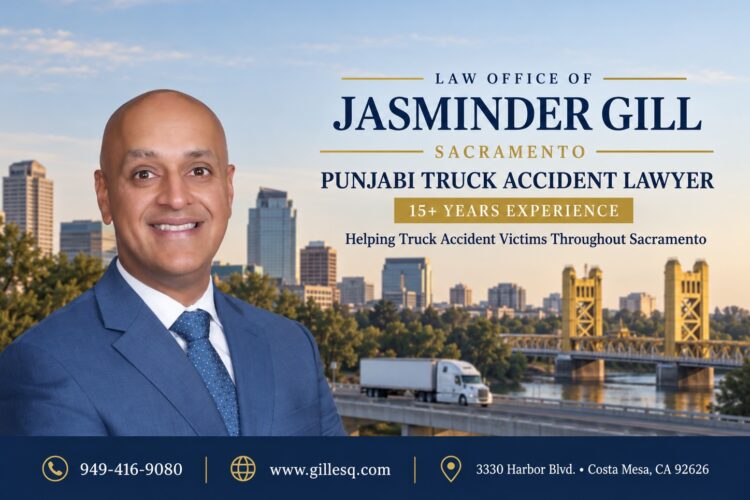
The Law Office of Jasminder Gill represents people injured in Sacramento truck accidents and other California personal injury matters. Attorney Jasminder Gill has practiced in California since 2009, has more than 15 years of personal injury experience, has helped thousands of clients, and has recovered millions for injury victims and families. He speaks Punjabi, and the firm’s team includes staff who hold commercial driver’s licenses.
Our approach follows the evidence behind the crash. We identify the commercial operation, examine potentially responsible parties, pursue relevant records, document medical and financial losses, and evaluate the compensation supported by the facts. A truck’s large size or a company’s familiar name does not substitute for proving the claim.
15+ YEARS EXPERIENCE | THOUSANDS OF CLIENTS HELPED | MILLIONS RECOVERED | CALIFORNIA ATTORNEY SINCE 2009 | TEAM INCLUDES CDL HOLDERS | PUNJABI ASSISTANCE | 24/7 FREE CONSULTATIONS
Call 949-416-9080 for a Free Sacramento Punjabi Truck Accident Consultation
Sacramento clients can contact our Costa Mesa office and communicate remotely by telephone or video. Punjabi-speaking attorney services and Spanish consultations are available.
Our team first gathers intake information for attorney review. If the matter is accepted and a written retainer is signed, we arrange the attorney consultation and begin work within the agreed representation. No attorney’s fee is required upfront, and no attorney’s fee is owed unless compensation is recovered. Costs and other terms are addressed in the written agreement. Past outcomes do not guarantee a future result.
Click Here to Message Us on WhatsApp
ਸੈਕਰਾਮੈਂਟੋ ਵਿੱਚ ਗੰਭੀਰ ਟਰੱਕ ਹਾਦਸਿਆਂ ਦੇ ਮਾਮਲਿਆਂ ਲਈ ਪੰਜਾਬੀ ਬੋਲਣ ਵਾਲੇ ਵਕੀਲ ਜਸਮਿੰਦਰ ਗਿੱਲ
ਜਦੋਂ ਟਰੱਕ ਹਾਦਸੇ ਵਿੱਚ ਕਈ ਵਾਹਨ ਸ਼ਾਮਲ ਹੋਣ, ਤਾਂ ਜ਼ਖ਼ਮੀ ਵਿਅਕਤੀ ਨੂੰ ਵੱਖ-ਵੱਖ ਡਰਾਈਵਰਾਂ ਅਤੇ ਬੀਮਾ ਕੰਪਨੀਆਂ ਵੱਲੋਂ ਅਲੱਗ ਜਾਣਕਾਰੀ ਮਿਲ ਸਕਦੀ ਹੈ। ਕਿਸ ਦੀ ਗ਼ਲਤੀ ਸੀ ਅਤੇ ਕਿਹੜੀ ਬੀਮਾ ਪਾਲਿਸੀ ਲਾਗੂ ਹੋ ਸਕਦੀ ਹੈ, ਇਹ ਹਮੇਸ਼ਾ ਸ਼ੁਰੂ ਵਿੱਚ ਸਪੱਸ਼ਟ ਨਹੀਂ ਹੁੰਦਾ। ਸੈਕਰਾਮੈਂਟੋ ਵਿੱਚ ਅਜਿਹੇ ਹਾਦਸੇ ਤੋਂ ਬਾਅਦ ਵਕੀਲ ਜਸਮਿੰਦਰ ਗਿੱਲ ਨਾਲ ਪੰਜਾਬੀ ਵਿੱਚ ਘਟਨਾ ਦੇ ਵੇਰਵੇ ਸਾਂਝੇ ਕੀਤੇ ਜਾ ਸਕਦੇ ਹਨ।
ਟੱਕਰ ਤੋਂ ਪਹਿਲਾਂ ਟਰੱਕ ਦੀ ਰਫ਼ਤਾਰ, ਵਾਹਨਾਂ ਵਿਚਕਾਰ ਦੂਰੀ, ਲੇਨ ਬਦਲਣ ਦਾ ਤਰੀਕਾ ਅਤੇ ਸੜਕ ਦੀ ਸਥਿਤੀ ਜਾਂਚ ਲਈ ਮਹੱਤਵਪੂਰਨ ਹੋ ਸਕਦੇ ਹਨ। ਕਈ ਵਾਰ ਟਰੱਕਿੰਗ ਕੰਪਨੀ ਦੇ ਰਿਕਾਰਡ ਅਤੇ ਵਾਹਨ ਵਿੱਚ ਮੌਜੂਦ ਇਲੈਕਟ੍ਰਾਨਿਕ ਡਾਟਾ ਵੀ ਘਟਨਾ ਨੂੰ ਸਮਝਣ ਵਿੱਚ ਮਦਦ ਕਰ ਸਕਦੇ ਹਨ। ਤੁਹਾਨੂੰ ਹਾਦਸੇ ਬਾਰੇ ਕੀ ਯਾਦ ਹੈ ਅਤੇ ਤੁਹਾਡੇ ਕੋਲ ਕਿਹੜੀਆਂ ਤਸਵੀਰਾਂ ਜਾਂ ਹੋਰ ਜਾਣਕਾਰੀ ਹੈ, ਇਹ ਆਪਣੀ ਭਾਸ਼ਾ ਵਿੱਚ ਦੱਸਣਾ ਲਾਭਦਾਇਕ ਹੋ ਸਕਦਾ ਹੈ।
Law Office of Jasminder Gill ਸੈਕਰਾਮੈਂਟੋ ਵਿੱਚ ਸੈਮੀ-ਟਰੱਕ, 18-ਪਹੀਆ ਟਰੱਕ, ਡਿਲਿਵਰੀ ਟਰੱਕ ਅਤੇ ਹੋਰ ਵਪਾਰਕ ਵਾਹਨਾਂ ਨਾਲ ਜੁੜੇ ਸੱਟਾਂ ਦੇ ਦਾਅਵਿਆਂ ਵਿੱਚ ਨੁਮਾਇੰਦਗੀ ਕਰਦਾ ਹੈ। ਗੰਭੀਰ ਸੱਟਾਂ ਕਾਰਨ ਲੰਮੇ ਇਲਾਜ, ਕਮਾਈ ਦੇ ਨੁਕਸਾਨ ਅਤੇ ਰੋਜ਼ਾਨਾ ਜ਼ਿੰਦਗੀ ’ਤੇ ਪਏ ਅਸਰ ਬਾਰੇ ਪੰਜਾਬੀ ਵਿੱਚ ਗੱਲ ਕੀਤੀ ਜਾ ਸਕਦੀ ਹੈ। ਜਾਨਲੇਵਾ ਹਾਦਸੇ ਵਿੱਚ ਆਪਣੇ ਕਿਸੇ ਪਿਆਰੇ ਨੂੰ ਗੁਆਉਣ ਵਾਲੇ ਪਰਿਵਾਰ ਵੀ ਕਾਨੂੰਨੀ ਮਦਦ ਲਈ ਸੰਪਰਕ ਕਰ ਸਕਦੇ ਹਨ।
ਸੈਕਰਾਮੈਂਟੋ ਵਿੱਚ ਟਰੱਕ ਹਾਦਸੇ ਬਾਰੇ ਪੰਜਾਬੀ ਵਿੱਚ ਗੱਲ ਕਰਨ ਲਈ 949-416-9080 ’ਤੇ ਕਾਲ ਕਰੋ। ਫ਼ੋਨ ਅਤੇ ਵੀਡੀਓ ਰਾਹੀਂ ਸੰਪਰਕ ਉਪਲਬਧ ਹੈ।
Sacramento’s Freeway Network Can Complicate a Truck Investigation
Interstate 5, Interstate 80, U.S. 50, and Highway 99 are important parts of Sacramento’s roadway network. Regional freight and local trips can meet around freeway connections, while a truck’s delivery may require leaving the highway for city streets or a commercial property.
A collision near a connection can involve drivers preparing for different exits and vehicles traveling at different speeds. Evidence must establish the paths they followed and the timing of any braking or lane changes. A roadway name alone does not explain how the accident occurred.
The truck’s larger trip can also be relevant. A vehicle approaching Sacramento after a long route presents different scheduling questions from a local delivery truck returning to a nearby business. Dispatch instructions and operational records may help identify what the driver was doing when the collision began.
I-5 and I-80 Movements in the Sacramento Area
A truck moving between major corridors may need to account for merging vehicles, changing traffic speed, and available space. If another car is beside the trailer, the driver must evaluate the entire combination vehicle before moving over.
We review available footage, contact locations, witness observations, and operational information. The analysis considers whether a driver signaled, had adequate clearance, reacted to congestion, or took a maneuver that affected another vehicle’s path.
U.S. 50 and Highway 99 Traffic
Traffic near freeway transitions can slow or change direction quickly. A truck driver may need additional stopping distance and time to recognize a developing hazard. A crash may involve one initial impact followed by others as vehicles react.
Establishing the first event is important. A reconstruction may need to distinguish a truck striking traffic from a truck reacting to a collision already underway. Both sequences can produce substantial damage, but they may support different allocations of responsibility.
Multi-Vehicle Truck Crashes Need a Clear Chronology
When several vehicles are involved, statements may conflict without anyone intentionally misrepresenting events. A driver near the front may hear impacts behind. An occupant farther back may see the truck but not the initial slowdown. A witness’s view may be blocked by the trailer.
We assemble the available information into a chronology: vehicle positions, lane movements, signals, braking, contact, and later impacts. Photographs, original recordings, physical evidence, and witness accounts can help explain the sequence.
The chronology can affect both liability and injury evaluation. A client may experience more than one force or impact. Medical records should accurately describe what is known, while technical questions may require qualified reconstruction assistance.
Do Not Assume the Most Damaged Vehicle Proves Fault
Damage can show contact and force, but it must be interpreted within the sequence. The vehicle with the greatest visible damage was not necessarily responsible for the first event, and a truck with limited damage may still have caused serious harm.
Similarly, a vehicle’s final location may reflect movement after impact rather than its original lane. Investigators should consider displacement, secondary collisions, steering, and the roadway layout before drawing conclusions.
Urban Deliveries, Commercial Vans, and Box Trucks
Sacramento commercial vehicle claims can involve smaller business vehicles as well as tractor-trailers. Delivery vans, moving trucks, box trucks, utility vehicles, and construction trucks may have repeated stops and different ownership or contractor arrangements.
A driver may back from a loading area, turn across a pedestrian’s path, enter traffic from a driveway, or stop in a position that obstructs visibility. The investigation should address the specific movement and the people exposed to it.
Useful information can include route assignments, delivery records, cameras, vehicle ownership, and the business’s instructions. The presence of a logo does not automatically identify the driver’s employer or every applicable policy.
Pedestrian and Bicycle Injuries Near a Delivery
Someone outside a passenger vehicle has little protection against a commercial truck. A low-speed turn or backing maneuver can still cause fractures, head injuries, crush injuries, or fatal harm.
We examine sightlines, signals, the driver’s observations, vehicle equipment, and the injured person’s position. Applicable duties depend on the circumstances. A careful investigation avoids assuming that every pedestrian or cyclist either had the right of way or caused the collision.
Construction Trucks and Equipment on Public Roads
Dump trucks, concrete mixers, flatbeds, and other construction vehicles may carry heavy materials or enter traffic from a work location. A crash may involve falling debris, an unsafe turn, a shifting load, a mechanical problem, or directions from another person.
Records can help identify the contractor, vehicle owner, carrier, loading business, and any service provider. Their roles must be evaluated separately. A project owner is not automatically liable for every accident involving a vehicle that served the project.
A workplace connection can create additional issues. The Law Office of Jasminder Gill handles personal injury and potential third-party liability matters, not workers’ compensation cases. We explain which claims are being evaluated and whether separate advice is needed.
Load Securement and Roadway Debris
Material falling from a truck may strike another vehicle directly or lead to a crash when a driver attempts to avoid it. Establishing the source of the material can be an important evidentiary problem if the truck continues traveling.
Witnesses, photographs, recordings, vehicle markings, and shipment information may help connect the hazard to a particular truck. Liability also requires evaluating loading, inspection, and the duty to secure the cargo.
Determine the Commercial Relationships Before Resolving the Claim
The truck driver, motor carrier, tractor owner, trailer owner, shipment arranger, loader, and repair business can be separate entities. Different parties may control different records and maintain different insurance.
We seek relevant contracts, registration information, operating records, dispatch communications, and equipment documents. The investigation should identify what each party controlled and how that role relates to the unsafe conduct or condition.
An independent-contractor label may require legal analysis rather than automatic acceptance. Freight-broker claims can involve federal issues, and government-related claims can have special rules. We evaluate supported potential claims without promising that every connected business can be held liable.
Company Conduct Beyond the Driver’s Mistake
A carrier may have responsibilities concerning driver qualifications, training, supervision, vehicle condition, and safety practices. If a known problem contributed to the crash, company records may help establish what was reported and how the company responded.
The relationship between the problem and the collision remains essential. A historical violation unrelated to the event does not automatically prove current fault. Relevant evidence should explain why the company’s conduct mattered in this case.
Commercial Insurance Coverage Needs Individual Investigation
Truck-related coverage is not uniform. Policy terms can depend on the vehicle, business use, ownership, contracts, the driver’s assignment, and the circumstances of the trip. An insurer may dispute whether a particular policy applies.
We investigate available coverage and potential recovery from responsible parties. A driver’s personal insurance may not tell the whole story, and a certificate of insurance may not provide every policy term needed for analysis.
A large limit does not establish the settlement value. Compensation still depends on liability, causation, the client’s losses, evidence, and legal risks. The claim should be evaluated against both the available recovery and the proof supporting it.
When Several Insurers Point to Each Other
One company may argue that the carrier’s policy applies, while another points to a lease or contractor agreement. Understanding the contracts and actual use of the equipment can be important to resolving the dispute.
An injured person should preserve correspondence and provide it to the attorney reviewing the claim. Do not assume that the first denial means that no coverage or responsible party exists.
Electronic Records and Cameras Can Reveal Different Parts of the Event
A truck may have duty logs, engine information, fleet tracking, dash cameras, driver-monitoring systems, or other technology. These sources serve different purposes and do not necessarily record identical events or retain information for the same period.
We identify what systems were installed, what relevant records may exist, and who controls them. Technical assistance may be needed for reliable retrieval or interpretation. Original files and context can matter as much as the selected information an insurer provides.
The evidence should be compared with the roadway, witnesses, vehicle damage, and medical history. A single data entry rarely tells the complete story of a collision involving several moving vehicles.
Footage Before the Collision Can Be Crucial
The final impact may be less informative than the preceding lane change or slowdown. A recording limited to a few seconds can leave uncertainty about the movement that created the hazard.
Requests should consider relevant time before and after the event, available camera angles, and associated timestamps. A client with personal dash-camera footage should preserve the original file rather than editing it into a short highlight.
Driver Fatigue, Long Routes, and Delivery Schedules
Fatigue analysis can require more than reading the driver’s statement that they felt rested. Prior work, rest opportunities, route timing, loading delays, and company instructions may be relevant.
The applicable hours-of-service rules depend on the commercial operation and any valid exception. Duty logs can be compared with GPS information, fuel purchases, receipts, appointments, and dispatch communications. Inconsistencies should be investigated and explained.
Fatigue must also be connected to unsafe operation. A logging violation does not automatically establish the cause of the crash. Conversely, formal compliance does not prove that a driver was attentive and capable of safely responding at the relevant moment.
Vehicle Maintenance and Component Failures
A tire blowout, brake problem, steering defect, trailer separation, or lighting failure can require examination of the equipment and its service history. The cause may involve wear, repairs, inspections, manufacturing, loading, or use.
We may seek reported defects, inspection documents, invoices, technician notes, replacement-part information, and access to the damaged components. Preservation matters because repairs can remove evidence and return the vehicle to a different condition.
A qualified expert may be needed when the mechanical explanation is disputed. The investigation should separate what the records establish from what requires technical testing or inference.
Serious Injury Claims Must Reflect the Client’s Medical Future
Sacramento truck accident clients may face traumatic brain injury, spinal injury, fractures, internal injuries, burns, or lasting physical limitations. Medical evaluation and necessary treatment take priority. Emergency symptoms call for immediate emergency assistance.
A claim needs accurate medical records and an understanding of the recovery outlook. Clients should tell providers about symptoms, prior conditions, the collision history, and changes after the event. Delayed or persistent symptoms require appropriate medical attention rather than assumptions based on vehicle damage.
Future care can become a major issue when treatment, rehabilitation, equipment, or assistance is expected to continue. Those needs require qualified evidence. We do not assume that every injury produces the same duration of treatment or disability.
Brain Injuries and Less Visible Limitations
Memory changes, fatigue, headaches, concentration problems, sleep disturbance, or emotional changes can affect work and family routines. Some consequences are not obvious in a photograph or a brief conversation.
Treating-provider evaluations, appropriate testing, and specific examples of changed function may help document those limitations. An attorney relies on medical evidence rather than making a diagnosis from a client’s description.
Work Losses, Caregiving, and Everyday Costs
An injury can interrupt employment, self-employment, household duties, or care provided to another person. Wage records, business documents, tax information, medical restrictions, receipts, and calendars can help establish the resulting losses.
Lost earning capacity may need separate review when permanent or continuing limitations affect future work. Returning to a job with reduced duties or hours can leave a financial consequence even after the first missed paycheck is replaced.
Pain and other personal losses also require evidence. Specific descriptions of difficulty sleeping, traveling, caring for children, or participating in former activities can explain the impact more clearly than a standard formula based on medical bills.
Consider What a Settlement Would Actually Provide
Attorney’s fees, case expenses, and applicable reimbursement obligations can affect distribution. Health insurers or benefit programs may assert repayment interests for accident-related payments.
A proposed amount should be evaluated with those obligations and the client’s future needs. Understanding the expected net distribution is part of making an informed settlement decision; no guarantee should be made that all repayment claims will disappear.
Family Representation After a Fatal Truck Accident
California wrongful death law determines the relatives eligible to bring a claim and the losses that may be recovered. A related survival action can involve estate losses and separate requirements. A family should receive individual advice about those distinctions.
The investigation may address the decedent’s earnings, benefits, household contributions, and relationships with eligible relatives. Documents and testimony can help establish the support and services the family lost.
We also seek evidence of how the fatal collision occurred and which commercial entities may be responsible. Families should not have to rely entirely on a carrier’s initial explanation while grieving and managing practical responsibilities.
Government Vehicles and Public-Property Issues
A public vehicle or an allegedly dangerous public roadway can require different claims procedures from a private-carrier case. Identifying the actual entity and the legal basis of responsibility is important.
A public agency’s ownership of a road does not automatically make it liable for every collision there. The condition, applicable duties, evidence, and legal requirements need evaluation. Notice and filing procedures can be particularly important.
The firm reviews potential public-entity involvement promptly when supported by the facts, while distinguishing evidence about the roadway from a legally viable claim against its owner.
Deadlines, Negotiation, and Filing a Lawsuit
California personal injury lawsuits generally have a two-year deadline. Public-entity injury claims generally require presentation within six months. Exceptions and additional procedures can affect the period, so obtain a specific deadline review.
An insurer’s ongoing investigation does not necessarily extend the time to file. Evidence also may disappear before the deadline expires. Early review helps identify preservation needs, entities, insurance, and procedural requirements.
A lawsuit may be necessary to obtain information or pursue a contested claim. Litigation can involve document requests, depositions, inspections, experts, negotiations, and trial preparation. The appropriate steps depend on the accepted matter and the client’s informed decisions.
Reconstructing a Freeway Chain Reaction Without Guessing
Imagine traffic slowing as several vehicles approach a freeway transition. A commercial truck brakes, a car changes lanes, and two impacts follow. An adjuster may focus on the car’s movement while another driver attributes the entire event to the truck. The correct analysis requires establishing the sequence rather than choosing the most confident account.
Original footage can show when each vehicle began moving or braking. Physical damage can help establish which surfaces made contact. Witnesses may clarify whether a truck’s lane change occurred before or after the first impact. Operational records may add timing information, subject to the system’s limitations.
A reconstruction can remain uncertain in some respects. The attorney should distinguish established facts from technical opinions and missing information. That approach gives the client a realistic understanding of the claim and helps avoid demands built on unsupported assumptions.
Different Camera Angles Can Explain Conflicting Accounts
A forward-facing truck camera may not show a car beside the trailer. A nearby motorist’s recording may show that car but miss the truck’s signal. A camera positioned after the collision location may capture the result without the initial movement.
Combining relevant views can help identify what each recording establishes. It is important to preserve the original recordings and associated information rather than relying only on clips selected by one party.
The Claim May Involve Both Freeway Driving and the Prior Delivery
A truck’s condition or driver’s schedule may be influenced by events before it entered the freeway. Loading, a repair, a delayed appointment, or another stop can produce records relevant to the later crash.
That connection must be supported. A shipment delay does not prove fatigue, and a recent repair does not prove a defect. The records may identify questions that require inspection, additional documents, or testimony.
We examine the meaningful parts of the route while avoiding a demand for unrelated business material simply because a large company is involved. A focused investigation can explain why a particular record is necessary to address liability or damages.
Distinguish Private Carriers From Government-Related Operations
A commercial-looking vehicle may be operated by a public entity, a private contractor, or a business serving a public project. The legal identity of the operator matters. The presence of government work does not make every associated vehicle publicly owned.
Registration, contracts, employment, and operational records can help clarify the relationship. If a public entity may be involved, special procedures require prompt review. If a private contractor controlled the conduct, that responsibility must be evaluated under the applicable law.
An injured person should provide whatever identifying information is available without assuming the correct defendant. The firm can investigate those relationships and explain which procedures need attention.
Injuries to Several People in One Crash
A collision can injure drivers, passengers, and people in other vehicles. Each person may have different injuries, losses, and legal positions. Available insurance may also need to address several claims.
The firm must evaluate potential conflicts before accepting representation. Family members do not automatically have identical interests, especially if a driver may share fault or several people are seeking payment from limited coverage.
An individual evaluation helps determine whether the firm can represent a particular person and what additional advice may be needed. The goal is clear representation, not promising to handle every participant merely because they were involved in the same event.
Continuing Medical Needs and the Timing of a Release
A client may face additional imaging, a specialist evaluation, a possible procedure, or a course of rehabilitation while an insurer seeks a final settlement. The uncertainty should be considered rather than treated as proof that future costs are either certain or nonexistent.
The attorney may need provider information concerning expected treatment and prognosis. Settlement discussions should account for the available evidence and the limits of prediction. A release’s effect must be understood before the client decides.
There can be valid reasons to resolve a claim before all treatment ends, but that choice requires informed evaluation. The question is whether the offer and terms reasonably address the known facts, anticipated needs, coverage, and risks of the case.
Mobility, Transportation, and the Practical Cost of an Injury
A Sacramento client may have difficulty commuting, attending treatment, or transporting a family member after the crash. A damaged vehicle and a physical restriction can create different transportation problems at the same time.
Save relevant receipts, correspondence, and information about the assistance required. The claim should distinguish vehicle-related expenses from injury-related needs and evaluate what is recoverable under the facts and applicable law.
A client who cannot drive because of medical restrictions may also need documentation of their duration and effect. Practical limitations can be important evidence of how the injuries disrupted the person’s routine, even when those limits are not obvious to an adjuster.
Discovery Should Answer Questions That Matter to the Case
When litigation is necessary, document requests, testimony, and inspections can be directed toward the disputed issues. A maintenance allegation may require service records and a technician’s testimony. A scheduling issue may require dispatch messages and explanation of duty records.
Some information may be private, proprietary, or otherwise subject to legal restrictions. The attorney must use appropriate procedures and address objections. Filing a lawsuit does not mean that every requested record will be produced immediately or without conditions.
We explain the purpose of important steps so the client understands why time is being spent on a particular issue. A complete investigation serves the accepted claim rather than creating complexity for its own sake.
An Offer Should Be Compared With the Supported Claim
A settlement evaluation involves more than comparing the offer to another person’s reported result. Different accidents have different liability evidence, injuries, recovery outlooks, coverage, and legal risks.
The client should understand the strongest supporting facts, the arguments the defense may make, potential litigation expenses, and the expected deductions from recovery. The firm explains those factors in clear language and answers questions before a decision.
A Punjabi-speaking client can discuss those choices directly with Jasminder Gill. The conversation should make the options easier to understand while preserving the client’s authority to accept or reject a proposed settlement.
Sacramento Truck Accident Questions
Is a passenger’s claim different from the driver’s claim?
A passenger may have a claim against one or more responsible parties without sharing the driver’s conduct. Insurance terms and relationships can still affect the matter. The investigation should evaluate the passenger’s injuries and rights separately.
What if the truck driver left the scene?
Preserve any identifying details, recordings, witness information, and reports. The vehicle may be identifiable through evidence obtained later. Available coverage and the legal issues depend on the facts; recovery cannot be assumed.
Can several companies share responsibility?
Yes, when evidence supports their respective roles. Ownership, employment, maintenance, loading, and operational control can identify different legal issues. Being connected with the delivery is not enough by itself to establish liability.
Does a larger truck policy mean my case is worth more?
Available coverage affects potential collection, but it does not determine damages. Injury severity, medical outlook, work losses, fault, evidence, and litigation risk must be evaluated independently of the policy limit.
Should I speak to my own insurance company?
Your policy may require reporting and cooperation. Requests from your insurer can differ from requests by the opposing carrier. Seek advice about the specific communication and preserve copies of statements and correspondence.
Can the firm review an injured worker’s third-party claim?
Potentially. The firm handles personal injury and possible third-party liability rather than workers’ compensation. The circumstances, responsible parties, and accepted scope must be reviewed before representation begins.
Can I work with Jasminder Gill without traveling to Costa Mesa?
Phone and video communication are available for Sacramento clients. Attorney Jasminder Gill speaks Punjabi, and Spanish consultations are available. The firm explains any documents or proceedings requiring other arrangements.
Contact a Punjabi-Speaking Truck Accident Attorney Serving Sacramento
A commercial collision can raise questions that are difficult to answer from a police report or an insurer’s phone call. The Law Office of Jasminder Gill investigates the responsible operation, preserves relevant evidence, documents the injuries, and pursues compensation supported by the case.