
Orange County Personal Injury Lawyer
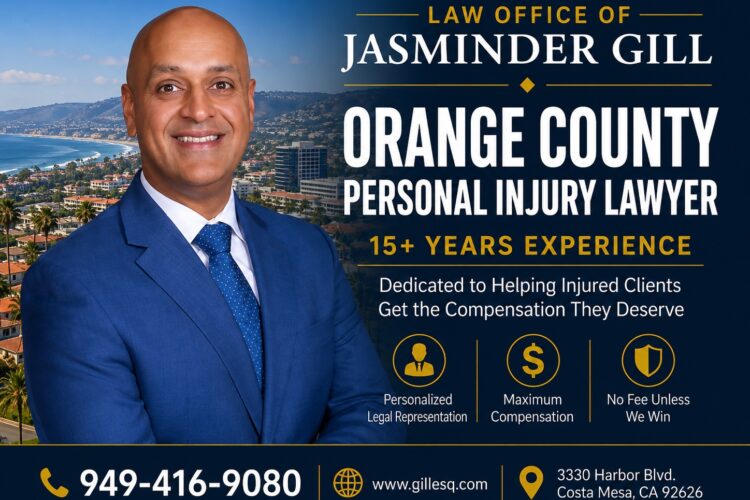
Experienced Personal Injury Representation in Orange County
A serious injury can leave you dealing with medical appointments, missed work, and insurance calls while your recovery is still uncertain. In Orange County, the accident may involve commuter traffic on the 405, a commercial truck near the 55, a pedestrian struck on a neighborhood street, or an unsafe condition at a business. Each situation raises its own questions about responsibility, insurance, and the losses the injured person can recover.
The Law Office of Jasminder Gill represents people injured through negligence throughout Orange County. Based in Costa Mesa, attorney Jasminder Gill has practiced law in California since 2009 and has more than 15 years of personal injury experience. He has helped thousands of clients, with millions recovered across his personal injury practice.
For accepted cases, the firm investigates how the injury occurred, identifies potentially responsible parties, evaluates insurance coverage, and documents both current losses and supported future needs. Jasminder Gill handles settlement negotiations and pursues litigation when appropriate. Clients receive guidance about the evidence, available options, and decisions that can affect their recovery.
Call 949-416-9080 For A Free Orange County Personal Injury Consultation
Initial inquiries are accepted 24/7. Accepted personal injury cases have no upfront attorney fee and no attorney fee unless compensation is recovered. Case costs are separate and governed by the written retainer.
Protecting Your Future After a Serious Injury
The immediate medical bills may be only part of the loss. An injury can affect your ability to earn a living, care for children, drive, sleep, or manage tasks that were routine before the accident. Some people recover with treatment; others face surgery, permanent limitations, or ongoing assistance.
Your claim should account for those consequences. Early decisions about evidence, insurance forms, and settlement can affect the ability to pursue compensation later. Jasminder Gill helps clients understand what is known, what remains uncertain, and what needs to be investigated before important decisions are made.
Why Choose the Law Office of Jasminder Gill?
Choosing representation means choosing who will examine the facts, explain your options, and advise you when important decisions arise. The firm’s approach combines personal attention with investigation directed at the issues in your individual case.
California Personal Injury Experience Since 2009
Jasminder Gill’s experience includes claims involving disputed fault, commercial vehicles, insurance coverage, serious injuries, and wrongful death. That experience helps him evaluate the evidence needed to establish responsibility and assess the practical issues affecting recovery. Every case receives its own evaluation; previous results do not establish another claim’s outcome.
Direct Communication With Your Attorney
Represented clients can communicate directly with Jasminder Gill about their case. Important conversations may include the evidence supporting liability, the effect of medical treatment on the claim, a settlement offer, or the decision to file a lawsuit.
The attorney explains the available information, risks, and practical consequences so the client can make an informed decision.
A Costa Mesa Office Serving Orange County
The Law Office of Jasminder Gill is located at 3330 Harbor Blvd, Costa Mesa, CA 92626. The firm represents clients throughout Orange County and across California. Phone and video communication can help clients participate when injuries, work, transportation, or family responsibilities make travel difficult.
Punjabi Language Access and Spanish Consultations
Jasminder Gill speaks Punjabi and can discuss accepted cases directly with Punjabi-speaking clients. Spanish consultations are also available. Clients can identify their preferred language when contacting the firm so communication needs can be addressed during the intake and representation process.
Personal Injury Cases We Handle
The firm represents people with injury claims arising from preventable accidents and dangerous conditions. The legal duties, available evidence, and insurance issues vary by case type. The firm’s practice does not include workers’ compensation, medical malpractice, traffic tickets, or property-damage-only matters.
Car Accidents
Car accident claims may involve rear-end collisions, T-bone impacts, head-on crashes, rollovers, unsafe lane changes, multi-vehicle collisions, impaired driving, and hit-and-run accidents. Injured passengers may also have claims, even when they were riding with the driver who contributed to the crash.
The investigation can include photographs, video, witness accounts, collision reports, vehicle damage, electronic vehicle data, and insurance policies. In a chain-reaction crash, the sequence of impacts may be important. At an intersection, traffic-signal information and camera recordings may help resolve competing accounts of the right-of-way.
Commercial Truck Accidents
A semi-truck, tractor-trailer, delivery truck, garbage truck, dump truck, tow truck, or box truck collision can involve multiple companies and separate insurance policies. The driver, carrier, vehicle owner, maintenance provider, loading company, or equipment manufacturer may have different responsibilities.
Electronic logging records, onboard data, dispatch communications, driver qualification files, maintenance records, cargo information, and camera footage may help establish the cause. A company’s involvement in transportation does not automatically make it liable; its conduct and legal relationship to the collision must be evaluated.
Motorcycle Accidents
Motorcycle claims can involve drivers turning across a rider’s path, changing lanes without checking, following too closely, or failing to yield. A rider may suffer fractures, road rash, nerve damage, brain injuries, or spinal trauma even when the motorcycle is relatively small compared with the other vehicle.
The investigation should examine the actual movement of the vehicles and the available evidence rather than assumptions about motorcyclists. Helmet use, visibility, lane position, speed, and the actions of other road users may become disputed issues.
Pedestrian Accidents
Pedestrians may be injured in crosswalks, intersections, parking lots, driveways, shopping centers, and along roadways. Turning or backing vehicles, poor visibility, distraction, and failure to yield can be relevant.
The location of the pedestrian and vehicle before impact matters. Scene photographs, video, lighting conditions, traffic controls, witnesses, and physical evidence can help evaluate responsibility. Being outside a marked crosswalk does not, by itself, resolve every question of fault.
Bicycle and E-Bike Accidents
Bicycle and e-bike claims may involve dooring, vehicles turning across bicycle lanes, unsafe passing, intersection collisions, or dangerous road conditions. Serious injuries can affect children and adults alike.
The investigation may examine the rider’s path, the driver’s conduct, roadway markings, bicycle classification, visibility, equipment, and insurance coverage. Preserve the bicycle, helmet, clothing, and damaged components when possible. Repairs or disposal can remove evidence needed to understand the collision.
Uber and Lyft Accidents
Rideshare coverage can depend on whether the driver was offline, waiting for a request, traveling to pick up a passenger, or carrying a passenger. Another driver’s insurance and applicable uninsured or underinsured motorist coverage may also be relevant.
App records, trip receipts, screenshots, vehicle information, and the identities of the drivers can help establish which coverage should be investigated. Passengers should preserve their trip information and any communications about the collision.
Bus Accidents
Bus injuries may involve public transit, school buses, charter buses, shuttles, or private transportation operators. A passenger can be injured during a collision, abrupt movement, boarding, or exiting. People outside the bus may also be struck while driving, walking, or cycling.
Identifying the operator and any public agency is important because government-claim procedures may apply. Route information, bus numbers, onboard video, dispatch records, inspection documents, and witness accounts can be useful evidence. A transit incident report should not be assumed to satisfy a formal government-claim requirement.
Slip-and-Fall and Premises Liability
Unsafe stairs, spilled liquids, uneven walkways, poor lighting, falling merchandise, missing handrails, and other dangerous conditions can cause serious injuries. A fall alone does not automatically establish a property owner’s liability.
The claim may depend on who controlled the location, how the hazard developed, whether the responsible party knew or should have known about it, and whether reasonable inspections or repairs occurred. Photographs, surveillance footage, incident reports, inspection logs, prior complaints, and maintenance records may help answer those questions.
Dog Bites and Animal Attacks
California law generally holds a dog owner responsible for a bite occurring in a public place or while the injured person is lawfully on private property, subject to applicable exceptions and defenses. Injuries caused by an animal without a bite may require a different liability analysis.
Dog attacks can cause scarring, nerve damage, infection, fractures, reconstructive surgery needs, and psychological harm. Identifying the owner, preserving photographs, obtaining medical records, and documenting animal-control involvement can support the investigation. Homeowners or renters insurance may be relevant, but coverage must be examined.
Construction and Other Third-Party Injury Claims
An injury at a construction site may involve unsafe equipment, a dangerous property condition, or negligence by a separate contractor or other third party. The identities and relationships of the companies involved matter.
The firm evaluates potential personal injury claims against responsible third parties. It does not handle workers’ compensation claims. A work-related injury can involve separate legal rights and deadlines that should not be treated as interchangeable.
Defective Product Claims
A defective vehicle component, battery, consumer product, or piece of equipment may cause a collision, fire, burn, or other serious injury. Product claims can involve design, manufacturing, or warning issues, and do not always follow the same analysis as ordinary negligence.
Keep the product, packaging, instructions, receipts, and damaged components when available. Do not alter or discard potential evidence before the claim is evaluated. Experts may need to inspect the product and consider how it was used and whether another condition contributed.
Burn Injury Claims
Serious burns may result from vehicle fires, unsafe electrical equipment, flammable materials, or dangerous property conditions. The investigation should identify the source of the fire or heat exposure and evaluate who was responsible for preventing the hazard.
Fire investigation records, photographs, equipment inspections, and witness accounts may help establish the cause. Medical documentation should address the extent of the burns, procedures, rehabilitation, and supported future care. Depending on the circumstances, a burn injury may involve a negligence claim, product liability, or another legal basis.
Serious Injuries and Long-Term Recovery
The diagnosis is only one part of understanding an injury claim. The duration of symptoms, treatment needs, work restrictions, and practical effect on daily life may be equally important.
Brain and Spinal Injuries
A brain injury may affect memory, concentration, balance, sleep, behavior, and the ability to work. Spinal injuries may cause pain, weakness, limited movement, or permanent disability. Early records and later specialist evaluations can help document the development of symptoms and the treatment required.
Family members may notice changes that the injured person has difficulty describing. Those observations can help explain daily limitations, alongside medical evidence.
Fractures, Burns, and Permanent Impairment
Fractures may require surgery, rehabilitation, or treatment for lasting limitations. Burns can involve skin grafting, infection risk, scarring, and repeated procedures. Amputations and other permanent injuries may create long-term needs for equipment, assistance, or changes to the home.
The claim should evaluate future care and functional limitations with qualified medical support rather than assuming recovery ends when the initial treatment ends.
Aggravation of an Existing Condition
A previous injury or health condition does not automatically defeat a claim. An accident may worsen an existing condition or cause a new injury in an area already affected by prior problems.
Medical records can help distinguish the person’s condition before and after the event. Disclose relevant history to the attorney and treating providers. Concealing a prior condition can undermine an otherwise valid explanation of accident-related harm.
Psychological and Daily-Life Effects
An injury may affect sleep, confidence, relationships, driving, household responsibilities, and independence. Some people need psychological treatment related to the trauma or the consequences of a physical injury.
These effects should be described specifically. Explain which tasks have become difficult, what assistance is needed, and how limitations have changed over time. Treatment records and credible observations can support that account.
Wrongful Death Claims for Surviving Families
When an accident causes a death, eligible surviving family members may have a wrongful-death claim. California law determines who may bring the action; not every relative has the same rights.
Recoverable losses may include financial support, household services, funeral and burial expenses, and the loss of companionship, care, and guidance, depending on the circumstances. Grief alone is not a separate recoverable category in an ordinary wrongful-death claim.
A survival action is separate and addresses certain claims belonging to the person who died. The authorized representative, available damages, and applicable law must be evaluated individually. An investigation may require medical records, accident evidence, income information, and documentation of family relationships and support.
An early investigation can help identify the parties involved and preserve records while family members address immediate needs.
How Responsibility Is Established
Many personal injury claims require proof of negligence. Other claims, including certain product and dog-bite cases, may involve different legal rules. The correct standard depends on the facts and defendant.
Duty and Failure to Use Reasonable Care
In a negligence case, the injured person must establish a legal duty and conduct that fell below the required standard. A driver may fail to yield; a business may fail to address a hazard; an employer may allow an unqualified employee to perform work that endangers others.
The investigation should identify the specific act or omission rather than treating the injury itself as proof of wrongdoing.
Connecting the Conduct to the Injury
The claim must connect the responsible party’s conduct to the harm. A violation or unsafe condition is not enough if it did not contribute to the injury being claimed.
Medical records, symptom timing, witness testimony, photographs, electronic data, and expert analysis can help establish causation. The defense may argue that symptoms resulted from an earlier condition, another event, or an unrelated cause.
Proving Recoverable Losses
The injured person must support the damages sought. Medical bills, work records, specialist opinions, and evidence of daily limitations may establish different parts of the claim.
In ordinary civil negligence cases, the standard is generally a preponderance of the evidence: the required facts must be more likely true than not. Specific issues, including punitive damages, can involve a higher standard.
Who May Be Liable for Your Injuries?
Responsibility can involve more than one person or organization. Identifying all potential defendants is important, but each claim needs a supported legal basis.
Drivers, Vehicle Owners, and Employers
A negligent driver may be liable for a collision. Vehicle ownership, permission to use the vehicle, and an employment relationship may create additional issues. An employer may be responsible for an employee acting within the course and scope of employment.
Separate claims may involve negligent hiring, supervision, retention, training, or entrustment. Employment and business records can help determine whether those issues apply.
Property Operators and Maintenance Providers
The property owner is not always the only party responsible for a dangerous condition. A tenant, business operator, property manager, or contractor may control the area or the work that created the hazard.
Leases, service agreements, inspection practices, repair records, and employee statements can help identify the relevant responsibilities. Notice and the timing of the hazard may be central to the case.
Manufacturers and Other Product Suppliers
A defective product may implicate a manufacturer, distributor, retailer, or another business in the supply chain. Expert inspection may be needed to identify a defect and distinguish it from damage caused by the accident itself.
Preserving the actual product is often important. Photographs alone may not allow an expert to evaluate a component or explain how it failed.
Public Agencies
Claims involving public vehicles, employees, sidewalks, road conditions, or other government operations have special rules. Public-entity liability requires a legal basis under the applicable law; it does not automatically follow from an injury occurring on public property.
Government claims can also involve short administrative deadlines before a lawsuit may proceed. Identifying the correct agency early is essential.
Evidence That Can Change the Outcome of a Claim
Evidence should address both responsibility and damages. Some records remain available for years, while camera footage or electronic information may disappear much sooner.
Scene Photographs and Camera Recordings
Photographs can document vehicle positions, damage, debris, traffic controls, lighting, property hazards, and visible injuries. Video may come from vehicles, businesses, nearby homes, or public systems.
Identify the location and approximate time of the event as precisely as possible. A preservation request may help, but it does not guarantee footage exists or will be released without further legal steps.
Reports and Witness Accounts
Police, business, animal-control, and other incident reports may identify witnesses, statements, observations, and the parties involved. They are useful starting points, but do not necessarily determine civil liability.
Witness contact information should be preserved promptly. Accounts can become harder to obtain as memories fade or people become difficult to locate.
Electronic Data and Business Records
Depending on the case, relevant information may include vehicle event data, GPS records, rideshare trip records, dispatch communications, maintenance documents, inspection logs, and employee records.
Access may require cooperation, formal requests, subpoenas, or litigation. Not every vehicle or device records the same information, and not every record can be obtained immediately.
Medical and Income Documentation
Treatment records help explain diagnoses, the progression of symptoms, procedures, work restrictions, and future recommendations. Income losses may require employer verification, pay records, commission history, or business records for a self-employed person.
Keep receipts for reasonable injury-related expenses. A brief, accurate record of limitations can also help show the effect of the injury over time.
Compensation Available After a Personal Injury
Compensation depends on the type of claim, the applicable law, and the evidence. The amount requested should reflect supported losses rather than a generic calculator or a comparison with someone else’s settlement.
Medical Expenses and Future Care
A claim may include reasonable accident-related medical expenses and supported future treatment needs. These can involve emergency care, surgery, rehabilitation, prescriptions, equipment, and other necessary services.
Future losses should be evaluated with medical support. The calculation may also require attention to insurance payments, outstanding balances, liens, and reimbursement rights.
Lost Income and Reduced Earning Capacity
Lost income may include missed wages and other supported employment losses. A lasting limitation may reduce the person’s ability to earn income in the future even if they return to some work.
Medical restrictions, work history, employer records, vocational evaluation, and economic analysis may help establish the difference between temporary missed work and a long-term loss of earning capacity.
Pain, Limitations, and Loss of Enjoyment
Noneconomic damages may address physical pain, emotional distress, disability, scarring, disfigurement, and lost enjoyment of life. These losses do not have a fixed price, but still require credible evidence.
The nature, severity, and duration of the injury matter. Describe specific changes in daily activities rather than relying on general statements that the accident was upsetting.
Related Expenses and Property Loss
Reasonable transportation, household assistance, and other injury-related expenses may be relevant. Serious injuries may also require home or vehicle modifications supported by the person’s needs.
Property damage may accompany an injury claim, including damage to a vehicle, bicycle, clothing, or other belongings. The firm represents injury cases and does not accept property-damage-only matters.
A Spouse’s Separate Claim
In appropriate circumstances, a spouse may have a separate loss-of-consortium claim involving the injury’s effect on the marital relationship. This is not an automatic addition to every personal injury case and should be evaluated separately.
Punitive Damages
Punitive damages require more than ordinary negligence. California law generally requires clear and convincing evidence of oppression, fraud, or malice, with additional requirements when an employer is involved.
They should not be assumed simply because an injury is serious or the defendant’s behavior was careless. California public entities are not liable for punitive damages.
What if You Share Responsibility?
California generally follows pure comparative negligence. Sharing responsibility does not automatically prevent recovery, but the recoverable damages may be reduced by the person’s percentage of fault.
For example, if supported damages total $100,000 and the injured person is assigned 20% fault, the amount attributable to the remaining fault would be $80,000, before other applicable limits, fees, costs, or obligations.
Fault allegations should be tested against evidence. An insurer may question speed, visibility, footwear, lane position, warnings, or other conduct. None of those allegations establishes a percentage of fault by itself.
Conduct after an accident, such as an alleged failure to obtain reasonable treatment, can raise separate arguments about avoidable losses. Medical needs and legitimate barriers to treatment should be documented rather than treated as proof that the person caused the accident.
Insurance Coverage and Settlement Decisions
Proving liability and identifying a source of payment are different tasks. A strong claim can still involve limited insurance or coverage disputes.
Finding Applicable Policies
Potential coverage can include automobile liability, commercial policies, homeowners or renters insurance, excess coverage, and applicable uninsured or underinsured motorist insurance. The responsible parties and the activity involved help determine which policies require review.
An employer, vehicle owner, or property operator may have coverage different from an individual defendant. Coverage must be investigated rather than assumed from the person’s involvement.
Uninsured and Underinsured Motorist Claims
Your own coverage may provide benefits when an at-fault driver has no insurance or insufficient liability limits, subject to the policy and legal requirements. Hit-and-run claims can involve additional conditions, including reporting and physical-contact requirements in applicable unidentified-driver cases.
Settlement with another insurer can affect an underinsured motorist claim. Review the applicable requirements before signing a release or accepting payment.
Recorded Statements and Medical Authorizations
Your own insurer may have contractual cooperation requirements. A request from the other party’s insurer does not necessarily create the same obligation.
Before providing a statement or authorization, understand who is requesting it and its scope. A broad medical release can reach unrelated history. Give accurate information and avoid speculation about fault, prognosis, or facts you do not know.
Early Offers and Final Releases
An early offer may arrive before the need for surgery, future treatment, or permanent limitations is understood. A settlement generally requires a release ending the claims covered by that agreement.
Discuss the injuries, coverage, evidence, and outstanding obligations before deciding. The client should understand the estimated amount they will receive after attorney fees, costs, and applicable reimbursement obligations, as well as the risks of continuing the case.
When an Insurance Company Disputes Your Claim
A request for missing information, a low settlement offer, and a written denial are different developments. The first may require additional documentation. The second may call for a supported counteroffer. A denial requires review of its factual or coverage basis and the options available to challenge it.
For represented clients, Jasminder Gill evaluates the insurer’s stated position and identifies what would address the actual disagreement. The response may involve clarifying the sequence of events, obtaining a provider’s assessment, documenting an income loss, or investigating another applicable policy.
Clients should retain correspondence, offers, authorizations, and documents already signed. A clear record helps establish what was requested, what was provided, and which questions remain unresolved. If the dispute cannot be resolved through negotiation, the attorney can explain whether litigation is appropriate.
What to Do After an Injury in Orange County
Attend to safety and urgent medical needs first. Evidence gathering should never put you or another person in danger.
Obtain Appropriate Medical Care
Seek care suited to your symptoms and follow reasonable treatment recommendations. Tell providers when symptoms began and whether they are changing. New or worsening symptoms require medical attention rather than waiting for an insurance decision.
If an appointment is delayed or treatment is interrupted by transportation, financial, or other barriers, document the reason and discuss it with the appropriate provider and attorney.
Report the Event and Preserve Available Information
Report a collision or dangerous incident to the appropriate authority or responsible business. Obtain the report number and identify the people involved. Preserve photographs, witnesses’ contact details, insurance information, and relevant receipts or messages.
Some vehicle collisions also require a separate DMV report. Do not assume a police report satisfies every reporting obligation. Likewise, a business or transit incident report may not satisfy a government-claim requirement.
Protect Physical and Digital Evidence
Keep relevant damaged belongings and avoid altering potential evidence before it can be evaluated. Save original photographs, recordings, app information, and correspondence.
Avoid posting details about the accident or injuries on social media. Do not delete existing potentially relevant material; discuss preservation and privacy concerns with the attorney.
Review Documents Before Signing
A release, medical authorization, or settlement agreement can affect legal rights. Understand the document and the party requesting it before signing. Preserve copies of anything already signed and tell the firm about offers or payments received.
How Your Personal Injury Case Moves Forward
The work required depends on the evidence, injuries, defendants, and whether the parties can resolve the dispute. A claim may settle without a lawsuit, but necessary legal deadlines must still be protected while negotiations continue.
Initial Screening and Attorney Review
Contact the firm with the date, location, description of the event, injuries, treatment, and any insurance information available. The initial evaluation determines whether the matter falls within the firm’s practice and whether it can be considered for representation.
If the firm accepts the case, a written retainer establishes the terms of representation. Attorney consultation follows the signed agreement. An initial inquiry alone does not establish an attorney-client relationship.
Investigation and Medical Documentation
For an accepted case, the firm identifies relevant evidence, potentially responsible parties, insurance policies, and deadlines. The investigation may continue as medical records and other information become available.
The attorney evaluates how treatment, work restrictions, and prognosis affect the claim. A lawsuit may need to be filed before treatment ends when a deadline requires action.
A Supported Demand and Negotiations
A settlement demand explains liability, injuries, treatment, and supported losses. Negotiations may involve additional records, disputed issues, and offers or counteroffers.
Jasminder Gill can explain an offer’s advantages and limitations. The decision to settle belongs to the client, and no settlement amount is guaranteed.
Litigation, Discovery, and Mediation
A lawsuit may be appropriate when liability is disputed, compensation remains inadequate, important evidence requires formal discovery, or the filing deadline is approaching.
Discovery can involve written requests, depositions, subpoenas, inspections, medical examinations, and expert opinions. Mediation offers a structured opportunity to negotiate with a neutral mediator. Filing a lawsuit does not mean a trial is inevitable.
Trial and Resolution
If the dispute does not settle, a judge or jury may decide liability and damages. Trial involves preparation of witnesses, exhibits, and legal arguments, and carries risks even when the evidence is strong.
After a settlement or recovery, outstanding costs, fees, liens, and reimbursement claims may need resolution before the client’s funds are distributed.
Attorney Fees and Case Costs
Accepted personal injury cases are handled on a contingency basis. There is no upfront attorney fee, and no attorney fee is owed unless the firm recovers compensation. The fee is a percentage of the recovery established by the written retainer, and the applicable percentage may depend on the stage of the case.
Expenses Are Separate From Attorney Fees
Case expenses may include record charges, filing fees, depositions, expert evaluations, inspections, and other costs needed to pursue the claim. They are separate from the attorney’s contingent fee.
The firm advances case costs for accepted cases. When compensation is recovered, advanced expenses are reimbursed from the recovery under the retainer, including the agreement’s provisions about the order of deductions. The retainer also controls cost responsibilities if there is no recovery.
Understanding Your Net Recovery
The settlement amount is not necessarily the amount paid directly to the client. Attorney fees, reimbursable expenses, medical liens, and valid insurance or benefit reimbursement claims may affect the distribution.
These obligations should be reviewed as part of evaluating a proposed settlement. A larger gross offer does not explain the client’s financial position without considering the applicable deductions.
How Long Does a Personal Injury Claim Take?
There is no reliable universal timeline. Clear responsibility and limited treatment may allow a case to resolve sooner, while surgery, lasting impairment, disputed evidence, multiple defendants, or litigation can extend the process.
The attorney needs enough information to evaluate future losses, but cannot simply wait indefinitely for treatment to end. Filing deadlines, insurance requirements, and preservation needs may require action while recovery continues.
Delays can also arise when obtaining records, resolving coverage questions, scheduling experts, or addressing court proceedings. The relevant question is what remains necessary to make a supported decision, rather than whether another person’s case settled faster.
Deadlines for Filing a Personal Injury Claim
Missing an applicable deadline can prevent recovery even when liability appears clear. Filing a claim with an insurer is different from filing a lawsuit, and ongoing discussions do not automatically extend the deadline.
General Injury-Lawsuit Deadline
Many California personal injury lawsuits generally must be filed within two years of the injury. Exceptions and different rules can apply, including issues involving delayed discovery, minors, or particular causes of action.
Do not calculate the deadline from this general rule alone. The defendant, event, claim type, and circumstances must be reviewed individually.
Government-Claim Requirements
Many injury claims against California public entities require presentation of a formal administrative claim within six months of accrual. Additional lawsuit deadlines apply after the agency’s response or other legally relevant events.
Reporting the incident, submitting an insurance form, or speaking with an agency employee should not be assumed to satisfy the claim-presentation rules. Identify possible public-agency involvement promptly.
Children and Other Special Circumstances
A child’s claim may involve different limitation rules and court approval of a settlement. Short government-claim deadlines should not be assumed to disappear because the injured person is a minor.
Wrongful-death, survival, insurance, and other related claims can also raise separate timing issues. Evidence preservation should begin early regardless of the ultimate lawsuit deadline.
Personal Injury Representation Across Orange County
The firm serves injured people throughout Orange County from its Costa Mesa office. Representation includes clients in coastal communities such as Newport Beach, Huntington Beach, and Laguna Beach, as well as Anaheim, Irvine, Fullerton, Orange, Tustin, and other inland communities.
The location of an incident helps direct the investigation. Freeway collisions may involve California Highway Patrol records; incidents on local streets may involve municipal police reports. A business injury may require identifying the tenant, property manager, and maintenance contractor. Those details determine which records and responsible parties need examination.
Phone and video communication allow clients to discuss their cases when treatment, limited mobility, or other responsibilities make travel difficult. The firm does not require clients to live in Costa Mesa to be considered for representation.
Orange County Personal Injury FAQs
Do I Have a Personal Injury Case?
You may have a claim if another party’s legally wrongful conduct caused your injury and recoverable losses. An accident alone does not establish liability. Review of the circumstances, evidence, and applicable law is needed.
When Should I Contact a Personal Injury Lawyer?
After addressing urgent safety and medical needs, seek legal review promptly if injuries are serious, fault is disputed, or important evidence may disappear. You do not need to finish treatment before contacting the firm.
How Much Does It Cost to Hire Jasminder Gill?
Accepted cases have no upfront attorney fee and no attorney fee unless compensation is recovered. The written retainer establishes the contingency percentage and separate case-cost responsibilities.
Will I Speak Directly With Jasminder Gill?
Yes. Represented clients can communicate directly with Jasminder Gill. New inquiries first undergo screening and review; attorney consultation follows acceptance and a signed retainer.
Can I Recover if I Was Partly at Fault?
Generally, yes. California’s pure comparative negligence system permits recovery despite shared responsibility, with damages reduced by your assigned percentage of fault.
What if the Police Report Blames Me?
A report does not automatically decide civil liability. Other evidence may support a different account. Provide the report and any information showing a factual error to the attorney.
Can I Have a Claim Without an Incident Report?
Possibly. Witnesses, video, photographs, communications, and other records may establish what happened. The absence of a report should be assessed alongside the available evidence.
What if Symptoms Appeared the Next Day?
Obtain appropriate medical evaluation and explain when symptoms began. Delayed symptoms do not automatically defeat a claim, but medical evidence must connect the injury to the incident.
Does a Preexisting Condition Prevent Recovery?
Not automatically. Compensation may be available for additional harm or aggravation caused by the accident. Disclose relevant medical history so the change in your condition can be evaluated accurately.
What if My Vehicle Has Little Visible Damage?
Repair cost alone does not determine whether an occupant was injured. The collision circumstances and medical evidence still need to support the claimed injury.
What if the Driver Was Uninsured or Left the Scene?
Applicable uninsured motorist coverage may provide benefits. Hit-and-run claims have specific policy and legal requirements, so preserve available vehicle and witness information and seek prompt review.
Can I Claim Compensation as a Passenger?
An injured passenger may pursue a claim against a responsible driver or another liable party. The available coverage depends on the vehicles, policies, and circumstances.
Should I Give a Recorded Statement?
First identify which insurer is asking. Your own policy may require cooperation; a request from the opposing insurer presents different issues. Be accurate, avoid guessing, and obtain guidance about applicable obligations.
How Can I Get Treatment While the Claim Is Pending?
Options depend on your medical needs, insurance, and available providers. Some providers offer lien-based treatment, which creates financial obligations. Do not postpone urgent care while waiting for a settlement.
What Happens to Medical Bills and Liens?
Outstanding bills and valid reimbursement claims may affect the amount you receive. Their legal basis and treatment arrangements should be reviewed when evaluating settlement and distributing funds.
Can I Settle Before Treatment Ends?
Sometimes, but unresolved future care can make an early settlement risky. A release generally ends the claims it covers, even if later treatment costs more than expected.
Will My Case Go to Trial?
Many cases settle, including after a lawsuit is filed. Trial may become necessary when the parties cannot resolve their dispute. The attorney can explain the options and risks.
How Much Is My Case Worth?
Value depends on the evidence, responsibility, injuries, future needs, income losses, daily limitations, and available recovery sources. An online calculator or another person’s settlement cannot reliably value your claim.
How Long Do I Have to File?
Many California injury lawsuits have a two-year deadline. Public-entity claims often require a government claim within six months. Exceptions and additional deadlines make individual review important.
Can a Parent Bring a Claim for an Injured Child?
A child’s claim generally proceeds through an appropriate adult representative, and settlement may require court approval. Special limitation rules do not remove every government-claim deadline.
Can a Family Bring a Wrongful-Death Claim?
Eligible surviving family members may have a wrongful-death claim. An authorized representative may also pursue a separate survival action. Eligibility and available damages require individual review.
Are Punitive Damages Available?
Only when the applicable legal requirements are met. Ordinary negligence is insufficient, and punitive damages cannot be recovered against California public entities.
Can I Post About the Accident Online?
Public statements and photographs may become evidence. Avoid discussing the claim online, preserve relevant existing material, and seek advice before changing or deleting it.
What Should I Provide When Contacting the Firm?
Provide the incident date, location, injuries, treatment, and available insurance or report information. Include offers or documents already signed. Missing paperwork should not delay an initial inquiry.
Are Punjabi and Spanish Consultations Available?
Jasminder Gill speaks Punjabi, and Spanish consultations are available. Identify your preferred language during intake so communication needs can be addressed.
Contact the Law Office of Jasminder Gill
If you were injured in Orange County, contact the firm to have the matter screened for possible representation. The initial evaluation considers the accident, injuries, potentially responsible parties, available information, and whether the case fits the firm’s personal injury practice.