
Sunnyvale Punjabi Personal Injury Lawyer
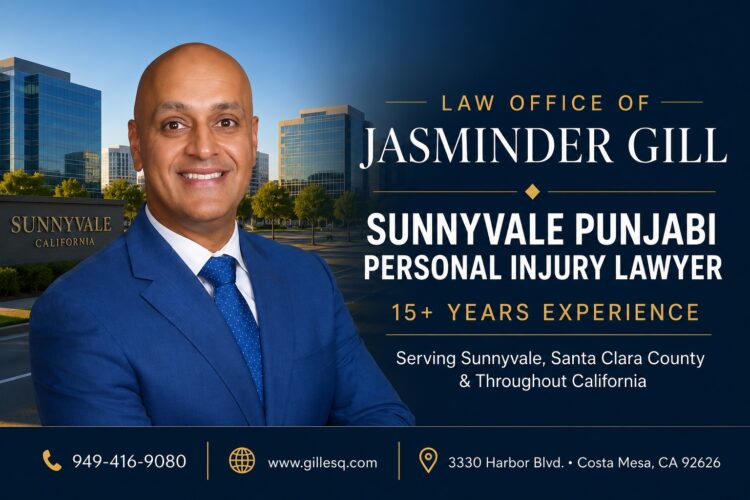
Personal Injury Representation for Sunnyvale Families, Commuters and Working Professionals
ਸਨੀਵੇਲ ਵਿੱਚ ਜ਼ਖਮੀ ਹੋਏ ਹੋ? ਜਸਮਿੰਦਰ ਗਿੱਲ ਨਾਲ ਪੰਜਾਬੀ ਵਿੱਚ ਗੱਲ ਕਰੋ
ਜੇ ਸਨੀਵੇਲ ਵਿੱਚ ਕਾਰ ਹਾਦਸੇ, ਟਰੱਕ ਹਾਦਸੇ ਜਾਂ ਕਿਸੇ ਹੋਰ ਘਟਨਾ ਕਾਰਨ ਤੁਹਾਨੂੰ ਸੱਟ ਲੱਗੀ ਹੈ, ਤਾਂ ਆਪਣੇ ਕੇਸ ਬਾਰੇ ਪੰਜਾਬੀ ਵਿੱਚ ਗੱਲ ਕਰ ਸਕਦੇ ਹੋ। ਵਕੀਲ ਜਸਮਿੰਦਰ ਗਿੱਲ ਪੰਜਾਬੀ ਬੋਲਦੇ ਹਨ ਅਤੇ ਕੈਲੀਫ਼ੋਰਨੀਆ ਵਿੱਚ ਜ਼ਖਮੀ ਲੋਕਾਂ ਦੀ ਨੁਮਾਇੰਦਗੀ ਕਰਦੇ ਹਨ। ਸੱਟਾਂ, ਕੰਮ ਤੋਂ ਹੋਏ ਨੁਕਸਾਨ ਅਤੇ ਇੰਸ਼ੋਰੈਂਸ ਕੰਪਨੀ ਦੇ ਸਵਾਲਾਂ ਬਾਰੇ ਜਾਣਕਾਰੀ ਲਈ 949-416-9080 ਤੇ ਕਾਲ ਕਰੋ। ਸਨੀਵੇਲ ਦੇ ਗਾਹਕ ਫ਼ੋਨ ਜਾਂ ਵੀਡੀਓ ਰਾਹੀਂ ਫ਼ਰਮ ਨਾਲ ਸੰਪਰਕ ਕਰ ਸਕਦੇ ਹਨ।
Click Here to Message Us on WhatsApp
A Sunnyvale injury can disrupt a work schedule, a school pickup, a commute across Silicon Valley or the ability to manage everyday responsibilities. The immediate problem may be pain or a hospital visit. The longer problem may be an insurer questioning the injury while your employer needs a return date and your family needs help at home.
The Law Office of Jasminder Gill represents people injured in Sunnyvale through California personal injury claims. Jasminder Gill has practiced as a California attorney since 2009 and brings more than 15 years of experience to accident and injury matters. The firm has helped thousands of clients and recovered millions of dollars for injury victims.
Representation includes car and commercial truck collisions, motorcycle crashes, pedestrian and bicycle injuries, dangerous property conditions, dog bites, catastrophic injuries and wrongful death. Each matter begins with the circumstances of the injury and the evidence needed to establish responsibility.
Call 949-416-9080 for a Free Sunnyvale Personal Injury Case Evaluation
Punjabi-speaking clients can discuss their concerns directly with Jasminder Gill. Spanish consultations are also available. The firm’s office is in Costa Mesa, with telephone and video communication available for Sunnyvale clients.
Discuss Your Sunnyvale Injury Claim in Punjabi
Understanding an injury claim requires more than translating individual words. A client needs to understand what an insurance company is requesting, why certain records matter and what accepting a settlement would mean.
A person may be comfortable speaking English at work but prefer Punjabi when discussing pain, family obligations or a legal agreement. Others may want to explain an accident without asking a spouse or adult child to interpret every conversation.
Jasminder Gill can discuss the claim in Punjabi, including questions about responsibility, treatment documentation, missed earnings and settlement decisions. When a client authorizes a family member to participate, the discussion can include that person while keeping the client informed and involved.
Language preference should not prevent an injured person from asking questions. If a document is unclear, the client should understand its purpose before signing it. If an offer is made, the client should understand the proposed attorney fee, case expenses, medical reimbursement obligations and estimated amount remaining.
Sunnyvale Personal Injury Cases We Handle
Different accidents require different investigations. A rear-end crash on a freeway, a fall at a business and a dog bite in a neighborhood do not create the same questions about evidence or responsibility.
The Law Office of Jasminder Gill handles injury matters involving:
- Car accidents, including rear-end, intersection, left-turn and multi-vehicle collisions.
- Semi-trucks, big rigs, box trucks, delivery vehicles and other commercial vehicles.
- Motorcycle accidents.
- Pedestrian, bicycle and e-bike collisions.
- Uber, Lyft and other rideshare accidents.
- Hit-and-run and uninsured or underinsured motorist injury claims.
- Slip-and-fall accidents and other premises liability matters.
- Dog bites and animal attacks.
- Construction accidents involving potential third-party liability.
- Burns, traumatic brain injuries and catastrophic harm.
- Fatal accidents and wrongful death claims.
The firm handles personal injury matters rather than traffic-ticket, medical-malpractice or workers’ compensation representation. A construction injury may involve a separate claim against a negligent third party, but the availability of that claim depends on the relationships and conduct involved.
Sunnyvale Car Accidents: Establishing What Happened Before Impact
A driver’s account often begins with the impact: “The other car hit me.” An injury investigation needs to reach further back. Which vehicle entered the intersection first? Was a driver turning out of a business? Did traffic stop before the rear vehicle began braking?
Those details can determine which evidence deserves attention.
In a disputed left-turn collision, witness observations and recordings may help establish the approaching vehicle’s position and the turning driver’s opportunity to yield. In a rear-end crash, photographs and vehicle damage may help distinguish a direct impact from a chain reaction involving several cars.
Passengers can also have important information. They may remember a signal, a sudden maneuver or a separate collision that does not appear in the initial insurance summary.
An attorney evaluates the available accounts together. The objective is to establish a supported sequence of events rather than repeat whichever explanation reached the insurer first.
El Camino Real and Access to Businesses
El Camino Real carries traffic past businesses and commercial entrances through Sunnyvale. A collision may involve a vehicle turning into a property, leaving a driveway or moving between a through lane and a turning position.
The relevant location is more precise than the road name. Photographs showing the entrance, lane markings, sight lines and nearby obstructions can help explain the maneuver.
A recording from a nearby business may show a vehicle’s approach even when it does not capture the impact. That earlier movement can be useful when drivers disagree about who crossed whose path.
Mathilda Avenue and Wolfe Road
A crash on Mathilda Avenue or Wolfe Road may involve a signalized intersection, a business entrance or a driver changing position before a turn.
A statement that one vehicle “came out of nowhere” does not explain responsibility. The investigation should examine where that vehicle was, whether it was visible and what each driver was doing.
The exact intersection, direction of travel and lane can narrow the inquiry. These details also help identify businesses or witnesses that may have observed the vehicles before contact.
Central Expressway and Lawrence Expressway
Expressway collisions may involve different vehicle movements from a neighborhood crash. A driver might be approaching an intersection, crossing traffic, entering from a connecting road or reacting to a stopped queue.
Where several vehicles are involved, the timing of each impact matters. A person may have been pushed into another vehicle rather than caused the initial collision.
Damage photographs, witness descriptions and available recordings can help separate these events. Each person’s claim should reflect the collision they experienced.
U.S. 101 and State Route 237
Freeway travel through the Sunnyvale area can involve merging traffic, lane changes and abrupt differences in speed.
For a sideswipe, the investigation may focus on the lane boundary, contact points and the vehicles’ relative positions. For a rear-end collision, it may focus on traffic conditions, following distance and the sequence of braking.
Identify the direction of travel and nearest exit when possible. A precise location helps an attorney evaluate the road configuration and determine where useful evidence might exist.
Truck and Commercial Vehicle Injury Claims in Sunnyvale
A commercial vehicle can introduce several businesses into an injury claim. The driver may work for one company, operate a vehicle owned by another and carry goods for a customer with no direct involvement in driving.
The business name displayed on a truck does not necessarily identify every party relevant to the claim.
A Sunnyvale commercial collision may involve a tractor-trailer traveling on a freeway, a box truck serving a business, a delivery van entering a parking area or a construction vehicle moving between job sites. The vehicle’s activity helps identify the records that may matter.
Identifying the Driver, Vehicle and Business Relationships
Useful starting information can include the driver’s identity, license plate, company markings and any visible commercial registration numbers.
For a tractor-trailer, information about the tractor and trailer should be recorded separately when safely available. Ownership and operating arrangements may differ.
An attorney can investigate who employed or retained the driver, who controlled the trip and whether another business had responsibility for equipment condition or loading. The investigation should connect a party’s conduct to the accident before asserting liability.
Commercial Records That May Explain the Collision
Relevant records may include dispatch instructions, route information, delivery schedules, inspection documents or electronic vehicle data.
A backing collision outside a business may require examining the delivery arrangement and available maneuvering space. A disputed freeway crash may require reviewing vehicle movement and driver records. A suspected mechanical problem may call for a qualified inspection.
The firm’s team includes CDL holders, providing practical familiarity with commercial vehicle operations. That knowledge can help identify questions for investigation. Technical opinions may still require an appropriate reconstruction, engineering or trucking expert.
Equipment and Repair Decisions
If an involved vehicle will be repaired, transferred or disposed of, an inspection opportunity may be lost.
Tell the attorney about known repair plans or communications from a towing company, insurer or vehicle owner. Preservation requests should be directed to the people or businesses that control the relevant evidence.
An injured person should not enter a storage facility, handle damaged equipment or attempt a technical examination without authorization.
Motorcycle, Bicycle and E-Bike Injuries
People riding motorcycles or bicycles may suffer substantial injuries even when the other vehicle has limited damage. The claim needs to account for the rider’s exposure and the actual mechanics of the collision.
A driver may allege that the rider was difficult to see, traveling too quickly or positioned improperly. Those claims require examination rather than automatic acceptance.
Motorcycle Collisions
A motorcycle crash may involve a turning driver, an unsafe lane change or a vehicle entering from a driveway. Useful evidence can include contact points, photographs of the road, rider accounts, witness observations and recordings.
Preserve the motorcycle and damaged protective equipment when possible. Clothing or a helmet may help document the event, but technical conclusions should come from qualified professionals.
The injury claim should also account for rehabilitation, physical restrictions and the effect of the accident on work and daily travel.
Bicycle and E-Bike Collisions
A bicycle collision may occur where a driver crosses a bicycle lane, opens a vehicle door or turns across the rider’s path.
The exact movement matters. A photograph of the bicycle lane, driveway or intersection can provide context that is missing from a general incident summary.
For an e-bike, retain available information about the model and configuration. If questions arise about the bicycle’s classification or condition, the attorney can evaluate whether those issues actually relate to the crash.
A rider’s equipment does not replace an examination of the motorist’s conduct.
Pedestrian Injuries at Intersections, Driveways and Parking Areas
A pedestrian injury claim should establish the person’s path and the driver’s movement before impact.
The accident may have occurred while someone crossed a street, walked past a driveway or moved through a parking area. A turning driver may have looked for approaching vehicles without noticing the person directly ahead.
Photographs can show visibility, signage, lighting and the relationship between the walking route and vehicle access. Witnesses may describe whether the driver stopped, accelerated or changed direction.
A marked crosswalk can be relevant, but the analysis should not end with whether paint was present. Applicable duties, traffic controls and the actions of everyone involved require review.
For a seriously injured pedestrian, family members may help locate incident information while the attorney develops the claim.
Uber, Lyft and Delivery Driver Accidents
A rideshare or delivery crash can involve overlapping personal and commercial insurance questions.
An insurer may need to know whether the driver was using an application, waiting for work, traveling toward a pickup or carrying a passenger. That status should be established through available records rather than assumption.
Passengers should retain trip receipts, driver information and messages related to the ride. A screenshot can help preserve information that becomes harder to retrieve later.
A delivery accident raises separate questions about the driver’s employer or contracting arrangement, vehicle ownership and activity at the time of impact.
The platform’s name alone does not establish legal responsibility or available coverage. The attorney should review the specific relationship, policy terms and evidence.
Slip-and-Fall and Other Dangerous Property Claims
A fall at a Sunnyvale store, restaurant, apartment property or business entrance may involve an unsafe condition and a dispute over who knew about it.
The condition might be a spill, an uneven walking surface, damaged stairs, inadequate lighting or an obstruction. A fall itself does not establish that the owner or operator breached a duty.
The investigation may examine how the condition developed, how long it existed and what inspections or repairs occurred.
Preserving the Condition and Incident Information
If safely possible, photograph the condition and the surrounding area. A close photograph may show the hazard, while a wider view can show its location and whether it was visible to an approaching person.
Keep the shoes worn during the incident and any report or written communication from the business.
Surveillance may show the fall, an earlier spill or employees passing through the area. A preservation request can seek relevant footage before routine deletion.
Identifying Who Controlled the Area
A property may involve an owner, tenant, management company and maintenance contractor. Their responsibilities may differ.
An attorney can examine control, agreements and actual practices to determine whose conduct should be investigated. Naming a company requires more than finding its name on a sign.
Dog Bites and Animal Attacks
A dog bite can leave lasting scars, nerve damage, infection concerns and anxiety around animals. An attack may also cause injury when someone falls while trying to escape.
The legal analysis depends on whether a bite occurred, the circumstances of the encounter and the parties involved. California dog-bite rules and other negligence principles may apply differently.
Document the location, owner information, witnesses and any available incident report. Photographs taken over time can help show how wounds heal and whether scarring remains.
For a child, the claim should consider the effect of the injury on school, sleep, activities and emotional recovery. Medical professionals should evaluate treatment needs.
An attorney can investigate applicable liability rules and insurance coverage without assuming that every animal-related injury follows the same legal path.
Construction Injuries and Potential Third-Party Responsibility
Construction incidents may involve equipment, vehicles, falling materials or unsafe conditions created by another contractor.
When an injured person was working, workers’ compensation issues may exist. A separate personal injury claim may also be possible if a legally responsible third party contributed to the harm.
The Law Office of Jasminder Gill evaluates potential third-party injury matters rather than handling workers’ compensation representation.
The inquiry may include who controlled the equipment, who performed the work and how the parties were connected. Contracts, photographs, inspection records and witness information can become important.
The fact that several companies were present does not make each company responsible. The evidence must establish the relevant conduct and legal relationship.
Serious Injuries Require More Than a List of Medical Bills
An injury claim should describe what happened to the person, how treatment developed and what limitations remain.
A hospital bill identifies a charge. It may not explain why an injured employee cannot complete a full shift, why a parent needs help lifting a child or why a person can no longer travel independently.
The medical record and the person’s daily experience should be evaluated together.
Brain Injuries and Changes in Function
Following a diagnosed brain injury, difficulties with concentration, memory or communication may affect work and family responsibilities.
An attorney can gather relevant evaluations, rehabilitation records and observations from people who know the injured person. Those records may help distinguish the person’s prior functioning from changes after the accident.
The claim should use the treating professionals’ findings rather than assign a diagnosis based on an insurance discussion.
Orthopedic, Back and Neck Injuries
A fracture, joint injury or spinal condition may require surgery, rehabilitation or work restrictions.
Recovery should be assessed by function as well as treatment completion. A person may finish a course of care while still having limitations in lifting, standing, driving or using a computer.
Relevant evidence may include restrictions, treatment recommendations and documentation of activities the person cannot perform.
Burns, Scarring and Permanent Disability
Some injuries affect appearance, sensation or independence long after the initial wound heals.
A serious claim may require evaluation of future procedures, mobility assistance, home adaptations or personal care. The need for expert assistance depends on the particular injury and disputed issues.
Future losses should be supported by appropriate evidence rather than added as an unexplained estimate.
Documenting Lost Earnings in Silicon Valley
Sunnyvale workers may receive hourly wages, salary, overtime, bonuses, commissions or other compensation. An absence can affect each category differently.
The attorney should determine which loss occurred and which records support it.
Salaried and Hourly Employees
Payroll records, attendance information and employer statements can help establish missed time and reduced earnings.
If a doctor imposed restrictions, retain the written restrictions and communications about whether the employer could accommodate them. A change to shorter shifts or different duties may matter even when the employee remained employed.
Using paid leave should also be documented. The effect on the claim requires individual review.
Bonuses and Equity Compensation
A compensation package may include a bonus or equity arrangement, but an accident does not automatically establish a recoverable loss in those benefits.
The inquiry may require plan documents, employment terms, vesting information and evidence connecting the injury to a specific financial consequence.
A possible promotion or expected stock value should not be treated as certain income without supporting facts.
Business Owners and Self-Employed Clients
For a business owner, missed work may affect revenue, expenses or the need to hire replacement help.
Relevant documentation can include invoices, tax records, canceled jobs and payments to substitutes. The attorney must distinguish an actual injury-related loss from ordinary changes in business performance.
Consistent records are more useful than an unsupported estimate of what the business might have earned.
The Effect of an Injury on Home and Family Life
Some losses appear outside employment.
An injured person may need help shopping, cooking, cleaning, caring for children or attending appointments. Family members may take time away from their own responsibilities to assist.
Keep a reasonable record of the help required, the tasks performed and any expenses incurred. The attorney can evaluate which losses are recoverable and how they should be presented.
Pain and emotional distress may also affect sleep, relationships and ordinary activities. A truthful account should explain concrete changes without exaggeration.
The strongest presentation reflects the person’s actual experience, supported where possible by medical records and observations from others.
Dealing With Insurance Requests After an Injury
Insurance correspondence may arrive before the injured person understands the full condition.
An adjuster may request a recorded account, authorization, documents or acceptance of an offer. Each request has a purpose, and the injured person should understand what is being requested.
A person’s own policy may impose cooperation requirements. A request from another party’s insurer may involve different considerations. Notify the attorney of communications so the applicable obligations can be reviewed.
Statements About the Accident
An early statement may become important when liability is disputed.
If you do not know a speed, distance or sequence, avoid guessing. If symptoms are still being evaluated, distinguish what you know from what remains uncertain.
An attorney can help address requests while maintaining accuracy and complying with applicable duties.
Access to Medical Information
The injury claim usually requires relevant medical evidence. An unrestricted authorization may allow access to information beyond the records connected to the accident.
Review what the authorization permits, who will receive the information and whether a more focused request is appropriate.
Existing health conditions should be disclosed honestly to the attorney. An aggravation claim requires a careful explanation of the difference between the earlier condition and the harm attributed to the new event.
Offers and Final Releases
An offer should be evaluated against responsibility, documented losses, available coverage and unresolved medical questions.
A release may end the right to seek further payment from the released parties. Before acceptance, the client should understand the claims being resolved and any remaining reimbursement obligations.
A short payment deadline from an adjuster does not itself establish that the offer fairly addresses the injury.
Uninsured Drivers, Hit-and-Run Accidents and Insufficient Coverage
Some injured people discover that the responsible driver has no insurance or a policy that may not cover the full loss.
The attorney can review potentially applicable coverage, including uninsured or underinsured motorist protection, when available. Eligibility, notice requirements and policy conditions must be examined.
A hit-and-run claim may also require evidence identifying the vehicle or establishing the circumstances of the collision. Preserve witness details, photographs, debris information and communications with law enforcement.
Do not assume that locating one policy ends the coverage investigation. Depending on the facts, vehicle ownership, employment or other arrangements may warrant further review.
Additional coverage cannot be promised before the applicable policies and relationships are examined.
Evidence Worth Preserving Early
The most useful evidence is evidence connected to a disputed issue.
A recording may establish vehicle movement. A maintenance document may address a dangerous condition. A medical record may explain a restriction. The attorney should identify what each item helps prove.
After urgent safety and medical needs have been addressed, retain available photographs, incident information, witness contacts and insurance correspondence.
Keep original digital files where possible. Screenshots can preserve visible information, but original recordings may contain additional detail.
If you know a business has footage, identify the business and approximate time promptly. Camera presence does not mean that useful footage was recorded or retained.
Avoid repairing or discarding an item that may require examination before discussing preservation with the attorney.
Wrongful Death After a Fatal Sunnyvale Accident
A fatal collision or other deadly incident requires attention to both the circumstances of the death and the family’s legal position.
The attorney can investigate responsibility, identify potentially applicable coverage and determine who may bring the relevant claims. Wrongful death and survival claims address different legal interests and should be evaluated separately.
Families may need help locating records while managing immediate arrangements. Keep available incident information, insurance communications and documents related to the deceased person’s work and support of the family.
The claim may include financial and personal losses permitted by law. The available categories depend on the legal claim and circumstances.
Punjabi-speaking family members can discuss these issues directly with Jasminder Gill without having to explain sensitive matters through an informal interpreter.
Filing Deadlines and Public Entity Claims
Waiting for an insurer to finish reviewing a claim does not necessarily protect the right to sue.
Many California personal injury lawsuits have a two-year filing period measured from the injury, subject to exceptions. A matter involving a public entity can require an earlier administrative claim, commonly within six months of accrual for injury or death claims.
A public vehicle, public property or disputed roadway condition may require investigation into which entity was involved. The road’s location alone may not identify the responsible agency.
Different requirements can apply to children, delayed discovery and other circumstances. Any denial notice or deadline correspondence should be reviewed promptly.
The attorney should calculate the applicable dates for the particular matter rather than rely on a general deadline listed online.
Attorney Fees and Case Expenses
For accepted personal injury matters, the Law Office of Jasminder Gill works under a written contingency-fee agreement.
The attorney fee is generally 33% when a matter resolves before a lawsuit is filed and 40% after filing. A trial-stage fee may be 45% when provided in the agreement. The signed retainer establishes the terms for the particular case.
There is no upfront attorney fee. The attorney fee depends on obtaining a recovery under the agreement.
Case expenses are separate. They may include records, filing fees, depositions, inspections and expert work. The firm advances case expenses, with repayment and allocation governed by the retainer.
Before signing, the client should understand the fee calculation, expense provisions and treatment of medical liens or reimbursement claims.
Working With the Firm From Sunnyvale
A Sunnyvale client can communicate with the Law Office of Jasminder Gill without making routine trips to Costa Mesa.
The process begins with an initial review of the incident and available information. If the firm accepts the matter, representation is established through a written agreement. Attorney consultation follows the firm’s intake and retainer process.
Telephone calls, video meetings and electronic document exchange can support communication about records, treatment developments and settlement discussions.
Some matters may require attendance at a deposition, examination, mediation or court proceeding. The attorney can explain those requirements as the case develops.
Clients should notify the firm about important changes, including new treatment recommendations, employment restrictions, additional incidents or direct contact from an insurer.
How the Claim Develops
An injury claim does not move through a fixed schedule.
The first work may involve confirming parties, preserving evidence and reviewing coverage. As treatment develops, the attorney can assemble the records needed to evaluate the injury and financial consequences.
Settlement discussions require a supported understanding of liability and loss. When negotiations do not resolve the matter appropriately, a lawsuit may be necessary.
Litigation can involve written questions, document exchanges, testimony and expert evaluation. Settlement may remain possible while the case proceeds.
The client should understand major decisions, including whether to accept an offer. No attorney can guarantee a settlement amount or completion date.
Questions About Sunnyvale Injury Representation
Can I Hire Jasminder Gill If I Live in Sunnyvale?
Yes. The firm serves California injury clients from its Costa Mesa office and offers telephone and video communication. The location and needs of the matter are considered during intake.
Can I Explain My Accident in Punjabi?
Yes. Jasminder Gill speaks Punjabi. You can discuss the incident, your concerns and decisions about the claim in Punjabi. A family member may participate when you authorize it.
What Information Should I Have Ready?
Start with the incident date, location, description of what happened and any available insurance or report information. Photographs, correspondence and treatment details can also help. Missing documents can be identified during review.
Does an Accident Report Decide Who Was Responsible?
A report can provide useful information, but it may contain incomplete accounts or conclusions that require further examination. Witnesses, recordings and physical evidence may support or challenge parts of the report.
What If I Was Hurt While Riding in Someone Else’s Car?
A passenger claim requires identifying which driver or other party contributed to the collision and what coverage applies. The relationship between the passenger and driver does not replace that investigation.
Can I Bring a Claim If I Contributed to the Accident?
Possible shared responsibility should be reviewed with the evidence. California comparative-fault principles can reduce damages based on the injured person’s share of fault. An insurer’s allegation does not by itself establish the correct percentage.
Should I Wait Until Treatment Ends to Contact the Firm?
You can contact the firm while treatment is ongoing. Evidence and deadlines may require attention before the medical outcome is fully understood. Treatment decisions remain with you and your healthcare professionals.
What If My Injury Keeps Me From Returning to the Same Job?
The claim may require reviewing medical restrictions, job duties and the availability of other work. A lasting reduction in earning ability needs support beyond the wages missed during the initial recovery.
Can the Firm Help With a Child’s Injury?
The firm can review an injury matter involving a child. The claim may involve special representation, settlement and court-approval requirements. The applicable deadlines should also be evaluated individually.
Will I Receive the Entire Settlement Amount?
Attorney fees, case expenses and applicable medical repayment obligations can affect the net amount. The final accounting should explain the deductions and the amount distributed to the client.
Is There a Guaranteed Value for My Case?
No. An evaluation depends on the evidence, injury, losses, legal issues and available recovery sources. A settlement from another person’s accident does not establish the value of yours.
Contact the Law Office of Jasminder Gill About a Sunnyvale Injury
An injury claim should reflect the accident you experienced and the losses it caused. It should account for disputed facts, medical developments and the practical effect on your work and family.
The Law Office of Jasminder Gill offers more than 15 years of California legal experience, Punjabi-speaking representation and remote communication for Sunnyvale clients.