
Orange County Truck Accident Lawyer | Law Office of Jasminder Gill
Experienced Representation for Victims Injured in Commercial Truck, Semi-Truck, and 18-Wheeler Accidents Throughout Orange County
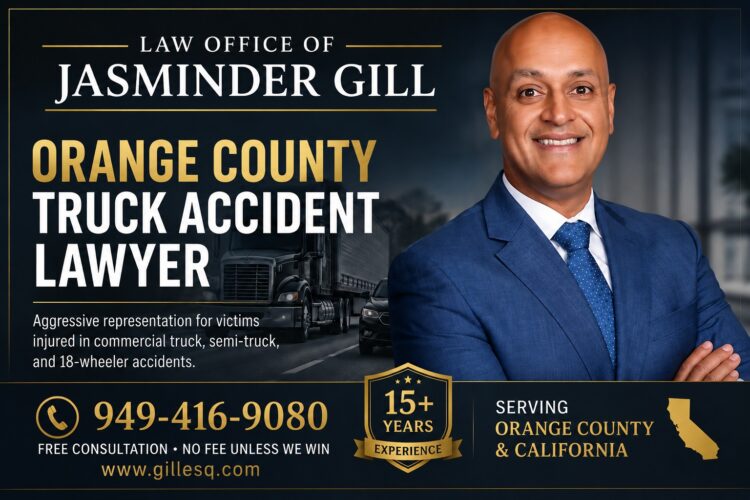 A commercial truck collision can change your life in seconds. You may be facing surgery, time away from work, a totaled vehicle, and uncertainty about whether you will recover fully. Meanwhile, a trucking company or its insurer may be asking for a statement or offering money before you understand the extent of your injuries.
Orange County truck accident lawyer Jasminder Gill represents people injured in semi-truck, tractor-trailer, big rig, 18-wheeler, delivery truck, and other commercial vehicle accidents. Based in Costa Mesa, the Law Office of Jasminder Gill investigates how the collision occurred, identifies potentially responsible parties, and pursues compensation for the losses caused by the crash.
Jasminder Gill has been a California attorney since 2009. He has more than 15 years of personal injury experience, has helped thousands of clients, and has recovered millions of dollars for injury victims. Our team includes commercial driver’s license holders with practical familiarity with commercial vehicles and trucking operations.
Call 949-416-9080 For A Free Orange County Truck Accident Consultation
Initial inquiries are accepted 24/7. There are no upfront attorney fees, and no attorney fee is owed unless compensation is recovered. Case costs are separate and governed by the written retainer. Jasminder Gill speaks Punjabi, and Spanish consultations are available.
Why Choose the Law Office of Jasminder Gill?
Truck accident representation requires attention to both the collision and the transportation operation behind it. The driver’s conduct matters, but equipment ownership, maintenance responsibilities, loading practices, and company decisions can also affect the claim.
California Personal Injury Experience Since 2009
Jasminder Gill’s personal injury practice includes serious injuries, disputed liability, commercial vehicle collisions, and wrongful death claims. Evaluating these cases means addressing two essential questions: who is legally responsible, and how has the injured person’s life changed?
A settlement offer should be evaluated against medical needs, income losses, permanent limitations, and the evidence supporting responsibility. A willingness to pay something does not establish that the insurer has accounted for the full claim.
A Local Orange County Law Firm
Our office is located at 3330 Harbor Blvd, Costa Mesa, CA 92626. We represent injured people throughout Orange County and offer phone and video communication for clients who cannot easily travel while recovering.
You can contact our office even if the carrier is headquartered outside California or the truck was traveling through Orange County on an interstate shipment. The investigation follows the relevant companies, records, and insurance policies.
Team Members With Commercial Driver’s Licenses
Our team includes staff members who hold CDLs. Their background provides practical familiarity with commercial driving, vehicle inspections, tractor-trailer movements, blind spots, and stopping considerations.
That familiarity helps frame questions about the operation involved in a crash. It works alongside the legal investigation and any necessary expert analysis. Responsibility is established through the evidence and applicable law.
Attention to the Companies Behind the Truck
The name on a truck may not identify everyone involved. The driver, tractor owner, trailer owner, motor carrier, maintenance provider, and cargo loader can be different people or businesses.
Our firm examines those relationships to determine which parties had relevant duties, whether their conduct contributed to the collision, and what coverage may be available. Identifying the transportation arrangement early helps avoid building a claim around incomplete information.
Truck Accidents on Orange County Roads
Commercial vehicles travel through Orange County to serve warehouses, businesses, construction projects, retail centers, and residential neighborhoods. The crash location helps determine what evidence exists and which driving or operating conditions need to be examined.
Freeway Collisions
I-5, I-405, SR-55, SR-57, SR-91, and SR-22 carry commercial and passenger traffic through the county. Truck collisions can occur during congestion, lane changes, freeway transitions, or sudden traffic slowdowns.
On I-405 near Costa Mesa and Fountain Valley, for example, an investigation may need to distinguish an abrupt traffic stop from inadequate following distance or delayed braking. On SR-55, merging traffic and freeway transitions can make lane position and driver attention important. The specific circumstances must be established rather than assumed from the roadway’s reputation.
Available evidence may include dash-camera footage, nearby recordings, electronic vehicle data, witness statements, and physical damage. In a multiple-vehicle crash, the sequence of impacts can be especially important.
Local Street Collisions
Truck accidents also occur on Harbor Boulevard, Bristol Street, Beach Boulevard, and other local streets. Delivery vehicles and service trucks may turn across sidewalks, back near parked vehicles, or enter traffic from commercial driveways.
Business cameras, loading-area records, route assignments, and witnesses can help explain these collisions. A driver’s view from the cab, the movement of pedestrians, and the trailer’s path through a turn may require careful examination.
Warehouse and Loading-Area Collisions
A commercial truck can injure someone while entering a distribution property, backing toward a dock, or leaving a construction site. These cases may involve a driver, a business directing truck movements, or a contractor responsible for site traffic procedures.
Relevant evidence can include delivery appointments, check-in records, instructions to drivers, site diagrams, camera footage, and the location of workers or other vehicles. The investigation should determine who controlled the activity that contributed to the injury.
Port-Related Truck Accidents
Container shipments connected with the Ports of Los Angeles and Long Beach can pass through Orange County on their way to warehouses and other destinations. Drayage operations may involve a tractor supplied by one business, a chassis supplied by another, and a container owned by a separate entity.
Container and Chassis Equipment
A chassis carries the shipping container and has its own tires, brakes, lights, and securement equipment. A crash involving that equipment may require determining who inspected it, maintained it, supplied it, and accepted it for use.
Interchange receipts, equipment inspection records, maintenance documents, and photographs can help identify responsibility. Preserving the tractor, chassis, container, and failed components may be important when an equipment defect is suspected.
Freight Records and Operational Control
Bills of lading, terminal records, dispatch communications, and warehouse or rail-transfer documents may show which businesses participated in the shipment. They can also help establish pickup times, equipment changes, and instructions given to the driver.
A business’s presence in those records does not automatically establish liability. The claim must connect its relevant conduct or equipment responsibility to the collision and resulting injuries.
Commercial Vehicles Involved in Injury Claims
Commercial vehicle claims are not limited to long-haul semi-trucks. Our firm evaluates injury cases involving trucks used for deliveries, construction, freight transportation, and local services.
Semi-Trucks and 18-Wheelers
A tractor-trailer has two major units that may have different owners and maintenance histories. Investigating a big rig collision can require examining the tractor’s controls and data alongside the trailer’s brakes, tires, lights, coupling equipment, and cargo.
The operation may involve an employee driver, an owner-operator, leased equipment, or several contracting businesses. Those arrangements affect which documents and insurance policies should be obtained.
Delivery Trucks and Commercial Vans
Delivery vehicles make frequent stops and may operate near homes, apartment buildings, shopping centers, and pedestrians. A collision may involve unsafe backing, distracted driving, poor visibility, or an abrupt movement into traffic.
Amazon-related deliveries, FedEx operations, UPS vehicles, moving trucks, and local delivery businesses require investigation of the actual operator. Branding alone may not establish who employed the driver, owned the vehicle, or controlled the delivery.
Dump Trucks and Construction Trucks
Dump trucks transport soil, gravel, demolition material, and other heavy loads. Potential issues include falling material, overloaded equipment, inadequate braking, unsafe backing, and entry into public traffic from a work site.
The driver’s employer, vehicle owner, loading operation, maintenance provider, and site contractor may have different responsibilities. Operational records and contracts help clarify those roles.
Concrete Mixer Trucks
Concrete mixers carry heavy loads that can affect stability and handling. A rollover or turning collision may require examining speed, steering, load condition, vehicle maintenance, and roadway geometry.
Delivery schedules and dispatch communications can also be relevant when investigating the circumstances leading to the crash. The analysis should account for the actual vehicle and load rather than treating every construction truck the same way.
Tanker Trucks
Tanker trucks transport liquids, including fuel and other materials. Liquid movement, load condition, speed, and steering may be relevant to a loss of control. A release of hazardous cargo can create additional injury risks beyond the initial impact.
These cases may require specialized inspection and engineering analysis, particularly when a rollover, fire, or equipment failure is involved.
Flatbed Trucks
Flatbeds carry machinery, lumber, steel, and other cargo that must be properly secured. Material that shifts or falls can strike another vehicle or cause an evasive collision.
Securement equipment, loading instructions, weight information, and inspection records may help establish whether the cargo was handled safely and who was responsible.
Garbage and Utility Trucks
Garbage, recycling, and utility trucks frequently stop, turn, and reverse near pedestrians and parked vehicles. Visibility, cameras, warning equipment, and operating procedures can be central issues.
Some trucks are operated by private contractors; others belong to public entities. Identifying the operator promptly matters because government claims can involve shorter deadlines and additional procedures.
Types of Truck Collisions
The movement of the truck helps direct the investigation. Different collision patterns call for different evidence, inspections, and reconstruction questions.
Rear-End Collisions
A truck striking stopped or slowing traffic raises questions about attention, following distance, speed, reaction time, and braking condition. Electronic data may help establish when the driver began braking and how the truck was moving beforehand.
Maintenance records and driver logs may help distinguish delayed braking from an equipment failure or fatigue-related loss of attention.
Chain-Reaction Crashes
When several vehicles collide, the order of impacts matters. A truck may initiate the collision, strike vehicles already involved, or contribute to a later impact. Witness accounts, video, damage patterns, and reconstruction can help separate those events.
Jackknife Accidents
A jackknife occurs when the trailer swings outward relative to the tractor. Braking, traction, vehicle speed, equipment condition, and load distribution may contribute. The final angle of the truck alone does not explain why control was lost.
Comparing tractor and trailer brake condition with cargo records and roadway evidence may help determine why the trailer swung out of alignment.
Underride Accidents
An underride occurs when a smaller vehicle moves beneath a trailer. Trailer position, visibility, lighting, reflective markings, and the condition of required rear protective equipment may be relevant. Preserving the trailer can be essential when a component defect is alleged.
The investigation should distinguish rear and side underrides because trailer positioning, visibility, and relevant equipment issues can differ.
Blind-Spot Collisions
A truck’s blind spots do not remove the driver’s duty to use reasonable care. An investigation may examine mirror use, cameras, signals, lane position, and the movement of surrounding vehicles before a lane change or merge.
Wide-Turn Collisions
During a turn, the trailer follows a different path from the tractor. A vehicle, bicyclist, or pedestrian may be struck even after the cab passes. Intersection footage and scene measurements can help establish the truck’s path and the conduct of everyone involved.
Rollover Accidents
A rollover may involve speed on a curve, abrupt steering, shifting cargo, a tire failure, or another stability problem. The investigation should evaluate vehicle condition, load information, road geometry, and driver actions together.
Loading documents, weight information, and an equipment inspection may help distinguish an unstable load from driver error or a mechanical failure.
Head-On Collisions
A head-on collision may involve crossing the centerline, unsafe passing, or loss of control. Physical evidence and electronic data can help determine which vehicle entered opposing traffic and whether fatigue, distraction, impairment, or equipment failure contributed.
Falling Cargo and Detached Equipment
A truck can cause a serious accident without directly striking the injured person’s vehicle. Cargo, a detached tire, or another component may hit nearby traffic or force a driver to swerve. Retaining the material and identifying the source truck can be important.
Loading records, securement inspections, and maintenance documents may help identify which business was responsible for the material or component that entered traffic.
T-Bone Truck Collisions
A T-bone collision occurs when the front of one vehicle strikes the side of another. These crashes may involve a truck running a red light, failing to yield, turning across approaching traffic, or entering a roadway from a commercial driveway.
Traffic-signal timing, intersection cameras, dash-camera recordings, witness statements, vehicle damage, and electronic truck data may help establish which driver had the right-of-way and how the collision occurred. The investigation may also examine whether distraction, delayed braking, or an equipment problem contributed.
Trailer-Separation Accidents
A trailer that separates from its tractor can strike nearby vehicles or become an obstruction that causes another collision. The investigation may examine the fifth-wheel coupling, kingpin, locking mechanism, and whether the connection was properly inspected before the trip.
Preserving the tractor, trailer, and coupling components can help an expert evaluate improper coupling, worn equipment, damage, or a product defect. Inspection reports, maintenance records, repair documents, and lease agreements may help identify the responsibilities of the driver, carrier, equipment owner, maintenance provider, or manufacturer.
Pedestrian and Bicycle Collisions
Turning and backing trucks can endanger people at intersections, driveways, loading areas, and along delivery routes. The investigation may examine right-of-way, visibility, mirrors, cameras, truck position, and site procedures.
Causes of Commercial Truck Accidents
A collision may have more than one cause. Establishing responsibility requires connecting the driver’s actions, equipment condition, or company conduct to what happened.
Driver Distraction
Cellphones, navigation systems, dispatch devices, and other distractions may divert attention from traffic. Camera recordings and communications records can help determine whether a distraction occurred at the relevant time.
Driver Fatigue
Long shifts, overnight schedules, disrupted sleep, and insufficient rest can affect alertness. A fatigue investigation may compare driver logs with dispatch records, location information, delivery times, and other evidence of the driver’s work history.
Fatigue can matter even when a particular driving-limit violation has not been established.
Unsafe Speed
A safe speed depends on traffic, visibility, road conditions, vehicle weight, and stopping needs. Driving within the posted limit does not necessarily mean the speed was reasonable for a loaded truck approaching congestion or a sharp curve.
Inadequate Following Distance
A driver who leaves too little stopping space may be unable to respond to a routine slowdown. Reconstruction may consider available distance, braking performance, driver response, and the movement of traffic ahead.
Alcohol or Drug Impairment
Impairment can affect judgment, coordination, and reactions. Officer observations, witness statements, testing records, and the driver’s conduct may help establish whether alcohol, drugs, or impairing medication contributed to the collision.
Inadequate Driver Training
A company may assign a driver to unfamiliar equipment or fail to address documented safety concerns. Driver qualifications, training materials, prior incidents, and supervisory records can help evaluate a separate claim against the company.
Poor Maintenance
Brake defects, worn tires, steering problems, and ignored equipment warnings may contribute to a crash. Inspections, repair records, service history, and retained components can help determine what failed and whether the problem should have been addressed earlier.
Unsafe Cargo Loading
Improper weight distribution or inadequate restraints can affect stability, braking, and the risk of falling cargo. Loading records and physical evidence should establish who loaded, secured, inspected, and controlled the shipment.
Who Can Be Held Responsible?
The truck driver is often the first person identified after a crash, but the investigation may reveal additional responsible parties. Each claim must be supported by facts establishing a legal duty, a breach of that duty, and a connection to the injuries.
The Truck Driver
A driver may be responsible for unsafe driving, including failing to yield, following too closely, making an unsafe lane change, or driving while impaired. The investigation should evaluate the driver’s actual actions and the conditions at the time.
The Motor Carrier or Employer
An employer may be responsible for an employee’s negligence within the scope of employment. A company may also face claims based on its own hiring, training, supervision, scheduling, or maintenance decisions.
Employment labels and contracting arrangements require examination. Calling someone an independent contractor does not answer every question about responsibility.
Tractor and Trailer Owners
Ownership, leasing agreements, and maintenance responsibilities can matter when equipment contributes to a collision. A trailer owner may be different from the carrier operating the tractor. Records should establish who had control and which duties applied.
Maintenance and Repair Businesses
A negligent inspection or repair may leave unsafe equipment in service. The claim may require comparing repair documents with the failed component and obtaining expert analysis of whether the work contributed to the crash.
Cargo Loaders and Shippers
A loading business may be responsible when its conduct creates an unsafe load that contributes to the injury. The carrier and driver may have separate inspection or securement duties. The particular arrangement and applicable rules must be reviewed.
Brokers and Logistics Companies
A freight broker or logistics business may arrange transportation without driving or maintaining the truck. Potential claims depend on its actual role, conduct, contractual relationships, and governing law. Some broker claims involve federal preemption issues that require careful legal analysis.
Manufacturers
A defective tire, brake component, coupling device, or other product may contribute to a collision. Preserving the product and documenting its condition can be crucial to evaluating a product liability claim.
Other Drivers
Another motorist may cause or contribute to a truck crash through an unsafe maneuver. In multiple-vehicle collisions, the investigation should evaluate all involved drivers and available insurance rather than assuming the largest vehicle bears all responsibility.
Government Entities
A public entity may be involved because it operated the vehicle or because a dangerous condition of public property contributed to the collision. These claims have specific legal requirements and generally require an administrative claim before a lawsuit. Prompt review is important.
Evidence in a Truck Accident Claim
A police report is an important starting point, but it may not contain the records needed to explain a commercial truck crash fully. Much of the relevant information is held by the carrier, vehicle owner, vendors, or other businesses.
Electronic Vehicle Data
The term “black box” commonly refers to electronic systems that may record speed, braking, engine activity, or certain vehicle events. The available information depends on the truck’s equipment and configuration.
Qualified collection helps preserve the data and its context. Electronic records should be evaluated alongside video, physical damage, scene measurements, and witness accounts.
Electronic Logging Devices
An ELD generally supports records of duty status and captures information such as vehicle movement, engine hours, mileage, and identifying details. It serves a different purpose from a crash-event recorder.
Comparing ELD information with delivery records and dispatch communications may help evaluate driving time or inconsistencies. The FMCSA—Electronic Logging Devices resource explains the federal ELD program. Applicability and exemptions depend on the operation.
Dash Cameras and Nearby Video
Truck-mounted cameras may show traffic, the driver’s actions, or events inside the cab. Businesses, residences, other drivers, and delivery properties may also have useful recordings.
Video retention periods vary. Identifying possible sources early can be important because footage may be routinely deleted before an insurance claim is resolved.
Dispatch and Shipment Records
Messages, route assignments, delivery appointments, GPS records, bills of lading, and weight tickets can help reconstruct the trip. They may establish where the driver traveled, when work occurred, and what instructions were given.
Driver Qualification Files
Driver files may contain licensing information, qualifications, training records, driving history, and other relevant documents. Company safety records may help evaluate what the employer knew and how it addressed concerns connected to the collision.
Applicable post-accident drug and alcohol testing records may also help evaluate whether impairment contributed to the collision.
Inspection and Maintenance Records
Inspection reports, service documents, repair invoices, and equipment warnings may reveal an existing problem. Their significance depends on the vehicle’s condition and the cause of the crash. A record of a past defect is most useful when tied to the failure being investigated.
Witness and Scene Evidence
Witnesses may describe events not captured in the police report. Photographs of debris, skid marks, signals, sightlines, cargo, and vehicle positions can also help reconstruct the collision.
Tractor and trailer numbers, license plates, USDOT numbers, and company markings can help identify the vehicles and businesses involved.
Preserving Trucking Evidence
Evidence can change while the injured person is still receiving treatment. Vehicles may be repaired, failed components discarded, camera recordings deleted, and some electronic information overwritten during continued operation.
A preservation request can identify records and equipment that relevant parties should retain. Depending on the claim, it may address the tractor, trailer, cargo, failed parts, electronic data, videos, driver records, and maintenance documents.
Federal retention requirements apply to certain records, but those requirements should not be treated as a reason to wait. Different evidence has different retention periods, and some sources are outside the carrier’s control.
If a vehicle is scheduled for repair, salvage, or disposal, tell your attorney promptly. An inspection may need to be arranged before its condition changes. A preservation letter does not itself obtain every record; litigation and formal discovery may be necessary to secure access.
Trucking Safety Regulations
Federal and California requirements may govern a truck’s operation, depending on the vehicle, route, cargo, and business activity. Applicable rules can help identify safety duties and the records relevant to a negligence claim.
Hours of Service
For many federally regulated property-carrying drivers, the general rules include an 11-hour driving limit after 10 consecutive hours off duty and a restriction on driving beyond the 14th consecutive hour after coming on duty. A qualifying 30-minute interruption is generally required after eight cumulative hours of driving without one. Weekly on-duty limits also apply.
The FMCSA hours-of-service summary describes the federal framework. Short-haul provisions, sleeper-berth rules, adverse-driving exceptions, and other circumstances can change the analysis. These rules should not be applied identically to every commercial vehicle.
Driver Qualifications
Licensing, medical qualification, training, and other requirements depend on the driver and operation. A qualification issue may be relevant when it relates to the unsafe conduct that caused the crash.
Equipment Safety
Applicable inspection and maintenance duties concern equipment such as brakes, tires, lights, steering, and coupling devices. Relevant evidence may include inspection reports, known defects, repair work, and the condition of the truck after the collision.
Cargo Securement
Securement requirements vary with the cargo and vehicle. Restraints, weight distribution, loading methods, and inspections may be examined when cargo movement or falling material contributed to an injury.
A regulatory violation can provide important evidence, but the claim still requires analysis of responsibility, causation, and damages.
Expert Analysis in Truck Accident Cases
Experts may be needed when the cause of the collision or the long-term consequences cannot be established adequately through ordinary records and testimony.
Accident Reconstruction
A reconstruction specialist may analyze speeds, braking, vehicle paths, sight distance, and the sequence of impacts. The analysis can combine physical evidence, electronic information, recordings, and measurements.
Engineering Analysis
An engineer may examine an alleged brake, tire, coupling, or other equipment failure. Loading and vehicle stability issues may also require specialized analysis. Preserving components gives the expert an opportunity to evaluate the actual evidence.
Medical and Future-Care Opinions
Treating providers and appropriate specialists help document diagnosis, causation, prognosis, and expected treatment. A life-care planner may organize anticipated care needs in a catastrophic injury case when supported by medical recommendations.
Vocational and Economic Analysis
A vocational specialist may evaluate how permanent restrictions affect employment options. An economist may analyze supported future income losses or other financial damages. The need for these experts depends on the issues in the particular claim.
Injuries Caused by Truck Accidents
Commercial truck collisions can cause severe injuries, but a claim should address the actual medical findings and consequences rather than rely on the truck’s size alone. Some injuries are immediately apparent; others become clearer as treatment continues.
Traumatic Brain Injuries
A traumatic brain injury may cause headaches, dizziness, memory changes, difficulty concentrating, balance problems, or changes in mood and sleep. These symptoms can affect work, driving, family responsibilities, and independence.
Ongoing symptoms should be reported to an appropriate medical provider. Medical evaluations and the person’s documented changes in daily functioning help explain the injury’s effect.
Spinal Cord Injuries
Spinal cord damage can cause loss of movement, sensation, or other functions. A serious injury may require rehabilitation, mobility equipment, home modifications, assistance with personal care, and future medical treatment.
Neck and Back Injuries
Disc injuries, vertebral fractures, nerve compression, and other neck or back conditions can cause persistent pain and physical restrictions. The claim may need to address treatment history, work limitations, and whether the collision caused a new injury or aggravated an earlier condition.
Fractures and Orthopedic Injuries
Fractures affecting the legs, arms, pelvis, ribs, or other bones may require surgery, hardware, rehabilitation, and additional procedures. Joint damage can interfere with walking, lifting, and other activities long after the fracture heals.
Internal Injuries
Internal bleeding and organ damage can be life-threatening. Severe abdominal or chest pain, difficulty breathing, fainting, or worsening symptoms after a crash require prompt medical attention. Legal documentation should follow the medical care needed to protect the injured person’s health.
Crush Injuries and Amputations
A person trapped in a collision may suffer extensive tissue, nerve, or vascular damage. Amputation injuries can involve prosthetic care, rehabilitation, recurring equipment needs, and changes to housing or employment.
Burn Injuries
Fuel leaks, vehicle fires, and hazardous cargo can cause serious burn injuries. Treatment may include grafts, reconstructive procedures, scar care, rehabilitation, and psychological support.
Soft-Tissue and Nerve Injuries
Sprains, muscle injuries, and nerve damage may cause substantial pain and limitations even without a major fracture. Consistent medical records can help show the symptoms, treatment, and effect on activities.
Psychological Injuries
Anxiety, post-traumatic stress, sleep disruption, and fear of driving can follow a serious crash. Appropriate treatment and documentation help establish accident-related psychological harm alongside physical injuries.
Life After a Serious Truck Accident
Recovery can affect far more than medical appointments. You may be unable to drive, return to your job, care for children, maintain your home, or participate in activities that were part of everyday life.
Permanent limitations can require accessible housing, adaptive equipment, transportation assistance, or a different occupation. Family members may take on responsibilities previously handled by the injured person. These changes should be documented specifically rather than reduced to a general statement that the accident was difficult.
Medical records, work restrictions, receipts, testimony, and appropriate expert opinions can help explain those consequences. A simple record of symptoms and interrupted activities may also help you communicate accurately with providers and your attorney.
The claim should reflect supported future needs as well as losses already incurred. Settling before the prognosis is understood can leave important consequences unaddressed.
Compensation for Truck Accident Injuries
Recoverable damages depend on responsibility, the injuries, available evidence, and applicable law. The purpose is to address losses caused by the collision, including future consequences that can be supported adequately.
Medical Expenses
A claim may include emergency care, hospitalization, surgery, medication, rehabilitation, and other accident-related treatment. Future medical expenses may also be recoverable when the evidence establishes reasonably necessary future care.
Lost Income
Missed work may be documented through payroll information, employer records, tax documents, or business records. Self-employed clients may need evidence showing how the injuries affected their ability to perform work and earn income.
Reduced Earning Capacity
A permanent injury may limit the ability to return to the same occupation, work the same hours, or pursue advancement. This loss is different from paychecks already missed and may require vocational or economic evidence.
Property and Other Financial Losses
Vehicle damage, loss of use, damaged belongings, transportation expenses, and necessary household assistance may be relevant. Keep records of expenses and explain how each relates to the crash. Property damage is one part of an injury claim; our firm focuses on personal injury representation.
Pain and Suffering
Physical pain, emotional distress, disability, disfigurement, and loss of enjoyment of life may be compensable. There is no universal multiplier that determines these damages. The evidence should show the injury’s severity, duration, and effect on the individual.
Loss of Consortium
An eligible spouse may have a separate claim for certain losses to the marital relationship caused by the injuries. Eligibility and the particular damages require individual evaluation.
Punitive Damages
Punitive damages are available only in limited circumstances. California generally requires clear and convincing evidence of oppression, fraud, or malice; ordinary negligence alone is insufficient. Additional requirements apply when seeking punitive damages from an employer or corporation.
Commercial Insurance Coverage
A truck accident may involve more than one insurance policy. The carrier, vehicle owner, contractor, and other responsible businesses may have separate coverage. Primary, excess, or umbrella policies may need to be examined.
Coverage depends on the actual operation, insured parties, policy terms, and applicable requirements. There is no single policy limit that applies to every truck, delivery van, or commercial vehicle.
Identifying coverage is separate from proving liability and damages. A larger policy does not guarantee a larger settlement, and an adjuster’s initial description of coverage should not be treated as the end of the investigation.
When relevant, your own uninsured or underinsured motorist coverage may also require review. Policy terms, California requirements, and coordination with other recoveries can affect whether that coverage applies.
When the Insurer Blames You
California generally uses pure comparative fault in negligence cases. An injured person’s recovery may be reduced by their percentage of responsibility rather than eliminated solely because they shared fault.
For example, a person found 20 percent responsible would generally have their recoverable damages reduced by 20 percent. The percentage must be supported by the facts; it is not established simply because the commercial insurer alleges an unsafe maneuver.
Video, witness accounts, vehicle data, and reconstruction can help address disputes about lane position, signals, following distance, or the order of impacts. A police report is relevant evidence but does not conclusively decide civil liability.
Tell your attorney about facts that may be unfavorable as well as those supporting your claim. A complete account helps evaluate the dispute and respond to the insurer accurately.
Fatal Truck Accident Claims
When negligence causes a fatal truck crash, qualifying family members may be able to pursue a wrongful death claim. These claims address losses suffered by eligible survivors.
Potential damages may include funeral and burial expenses, lost financial support, lost household services, and loss of companionship, guidance, affection, and moral support, as permitted by law.
A related survival action concerns claims belonging to the deceased person’s estate and involves separate rules. The available damages and authorized claimant must be evaluated under the law applicable to the case.
The investigation may still require immediate preservation of the truck, data, video, driver records, and shipment information. Our firm represents families following fatal commercial vehicle collisions and evaluates the responsible parties, available coverage, and applicable deadlines.
What to Do After a Truck Accident
Protecting your health comes first. Once urgent needs are addressed, the information collected and documents preserved can help establish the claim.
Obtain Emergency Help
Call 911 when emergency assistance is needed and report the collision. Follow medical advice and obtain appropriate evaluation for symptoms. Do not delay necessary care while trying to collect evidence.
Identify the Truck and Driver
If it is safe, collect the driver’s information and photograph company markings, license plates, USDOT numbers, and tractor and trailer numbers. Obtain available insurance information. The tractor and trailer may identify different businesses.
Document the Scene
Photograph vehicles, damage, debris, cargo, road conditions, signals, and the surrounding area without entering traffic. Obtain witness contact information and preserve original recordings. Other people may help gather information if you are injured.
Complete Required Reports
California requires an SR-1 report to the DMV within 10 days when a collision causes injury, death, or more than $1,000 in property damage. This is separate from a report made to police or an insurer. An insurance agent, broker, or legal representative may assist with the filing.
Preserve Damaged Property
Keep relevant damaged belongings and photograph your vehicle before repairs or disposal. Tell your attorney if an insurer or salvage company intends to move, repair, or destroy a vehicle that may need inspection.
Review Insurance Documents Carefully
Before giving the opposing insurer a recorded statement, signing a broad medical authorization, or accepting a settlement, understand what is being requested. Your own policy may impose cooperation duties and reporting deadlines, which also need attention.
Use Care With Social Media
Public posts can be taken out of context when an insurer evaluates injuries. Avoid discussing the claim or posting misleading impressions of your condition. Preserve relevant existing material and ask your attorney before deleting accident-related content.
How Our Firm Handles Truck Injury Claims
Contacting the office begins with intake screening. Our team gathers information for attorney review, including the collision circumstances, injuries, treatment, and available records. If the firm accepts the case and you sign the written retainer, we arrange an attorney consultation and begin representation.
Investigation
The investigation identifies the vehicles, people, companies, and evidence involved. Depending on the facts, it may include preservation requests, records collection, inspections, witness interviews, and expert evaluation.
Claim Development
Medical documentation, employment records, expense information, and evidence of long-term limitations help establish damages. The legal analysis addresses responsibility and potential claims against each relevant party.
Insurance Negotiations
We present the supported claim and evaluate the insurer’s response. Negotiations should account for the injuries, prognosis, disputed issues, and available coverage. An early offer may require further investigation before it can be evaluated meaningfully.
Litigation
A lawsuit may be needed when responsibility is disputed, important records cannot be obtained voluntarily, or settlement discussions do not resolve the claim. Litigation can involve depositions, document requests, inspections, experts, mediation, and trial preparation.
Many cases settle, but settlement is not guaranteed. The strategy depends on the evidence, legal issues, and circumstances of the claim.
Attorney Fees
The Law Office of Jasminder Gill handles accepted truck injury cases on a contingency-fee basis. There are no upfront attorney fees, and no attorney fee is owed unless compensation is recovered.
The applicable percentage and any changes based on the stage of the case are set out in the written retainer. California truck accident representation does not have one universal contingency percentage that applies to every firm or case.
Before signing, review how the attorney fee is calculated and how the agreement addresses settlement, litigation, and trial. Contacting the office alone does not create an attorney-client relationship; representation begins after acceptance and a signed retainer.
Case Costs
Case costs are separate from attorney fees. They may include medical records, filing fees, depositions, vehicle inspections, accident reconstruction, and other expert work.
Our firm advances case costs under the written retainer. When compensation is recovered, those advanced costs are reimbursed from the recovery as the agreement provides. The retainer controls the fee calculation, cost reimbursement, and any responsibility for costs if there is no recovery.
The gross settlement and the amount distributed to the client are different figures. Understanding fees, costs, and any medical liens or reimbursement claims helps you evaluate the expected distribution.
California Filing Deadlines
California generally provides two years to file a personal injury lawsuit arising from wrongful conduct. California Code of Civil Procedure section 335.1 also addresses wrongful death actions. The accrual date and any exceptions require individual review.
Government-related injury claims generally must be presented to the appropriate public entity within six months of accrual under California Government Code section 911.2. Separate rules govern the time to file a later lawsuit.
Claims involving minors, delayed discovery, particular defendants, or other circumstances may have different deadlines. Continuing treatment, insurance discussions, or a pending police investigation should not be assumed to extend the time to sue.
Preserving evidence may be urgent even when considerable time remains before a filing deadline. Prompt review helps identify both the legal deadlines and the evidence that needs attention now.
Frequently Asked Questions About Orange County Truck Accidents
Do I Need a Lawyer After a Truck Accident?
Hiring a lawyer is not legally required. A serious truck injury claim can nevertheless involve several companies, specialized records, commercial insurance, and disputed future losses. An attorney can investigate responsibility, preserve evidence, document damages, and handle the legal claim while you focus on treatment.
Who Can Be Responsible Besides the Driver?
Potentially responsible parties may include the motor carrier, employer, equipment owner, maintenance business, cargo loader, manufacturer, another driver, or a public entity. The claim must establish how each party’s conduct or responsibility contributed to the injury. Participation in the shipment alone does not establish fault.
What if the Driver Was an Independent Contractor?
The label does not resolve every potential claim. Contracts, control, equipment ownership, the transportation arrangement, and applicable law must be reviewed. Other businesses may also have separate duties concerning maintenance, loading, or their own conduct.
What if I Do Not Know the Trucking Company’s Name?
Provide whatever you have: photographs, identifying numbers, a report number, insurance correspondence, witness information, or a vehicle description. A license plate, USDOT number, or tractor and trailer number may help identify the operation. You do not need every record before contacting our office.
Can I Bring a Claim After a Truck Hit-and-Run?
Possibly. Video, witnesses, identifying markings, and other records may help locate the truck. Your uninsured motorist coverage may also require review. California hit-and-run coverage has specific conditions, including physical-contact requirements in certain unidentified-vehicle claims. Prompt reporting and policy review are important.
What if the Carrier Is Based Outside California?
An out-of-state headquarters does not automatically prevent a claim arising from an Orange County collision. The appropriate court, applicable law, service requirements, and responsible entities must be evaluated. Records may need to be obtained from several locations.
Can I Recover if the Police Report Blames Me?
Possibly. The report does not conclusively determine civil fault. Video, witness accounts, vehicle data, and physical evidence may support a different account or show shared responsibility. Tell your attorney what you believe is inaccurate and why.
What if I Was Partially at Fault?
California’s comparative-fault rules generally allow recovery reduced by the injured person’s percentage of responsibility. An insurer’s allegation is not itself a final fault determination. The actual evidence should be evaluated before accepting its position.
Is an ELD the Same as a Truck’s Black Box?
No. An ELD primarily supports driving-time and duty-status records. Other electronic vehicle systems may capture operational or event information such as braking and speed. The equipment and available data vary, so both sources may need examination.
How Quickly Can Trucking Evidence Disappear?
There is no single retention period for all evidence. Some video may be deleted quickly, vehicles may be repaired, and certain electronic information may be overwritten. Other records are subject to retention requirements. Early preservation efforts help address those different sources.
What Happens if Records Were Destroyed?
The consequences depend on the evidence, timing, preservation duties, and circumstances. Alternative records may still help establish the claim. Destruction does not automatically guarantee a favorable outcome or punitive damages, but it may create important issues for investigation and litigation.
Is the Truck Driver Automatically Excused Because I Was in a Blind Spot?
No. Blind spots are part of operating a large vehicle, and the driver must still use reasonable care when turning, backing, merging, or changing lanes. Responsibility depends on the conduct of everyone involved and the evidence of the maneuver.
Can I Have a Claim if the Truck Never Hit My Vehicle?
Yes, depending on the facts. Falling cargo, detached equipment, or a negligent maneuver may cause another collision without direct truck contact. Identifying the truck and proving the connection to the injury are important. Separate uninsured motorist coverage conditions may also affect a no-contact claim.
Can I Bring a Claim After an Amazon, FedEx, or UPS Collision?
Potentially. The investigation should identify the actual operator, driver’s employer, vehicle owner, and insurance arrangement. An Amazon-branded vehicle, for example, may be operated by a delivery service partner. Liability must be evaluated under the particular facts rather than assumed from branding.
What if I Had a Preexisting Injury?
A prior condition does not automatically bar recovery. A claim may include an accident-related aggravation or additional injury. Earlier records, current findings, treatment history, and medical opinions can help show what changed. Be accurate about symptoms and treatment before the collision.
What if My Symptoms Appeared Later?
Delayed symptoms do not automatically defeat a claim. Seek appropriate medical evaluation and explain when symptoms began. Medical records and other evidence help evaluate whether the collision caused them. Do not assume every later symptom is accident-related without medical assessment.
Are Truck Accident Settlements Always Larger Than Car Accident Settlements?
No. A truck crash may cause substantial injuries and involve commercial coverage, but value depends on liability, damages, available insurance, and other case-specific issues. Vehicle size or policy limits alone do not establish a settlement amount.
Can I Recover Future Treatment Costs?
Future care may be compensable when supported by appropriate medical evidence. The claim should identify reasonably necessary treatment and its expected cost rather than rely on speculation. Serious permanent injuries may require additional future-care analysis.
Should I Give the Other Insurer a Recorded Statement?
Consider obtaining legal advice first. Questions may concern fault, symptoms, or earlier medical conditions before the evidence is understood. Your own insurer may have different cooperation requirements, so distinguish the opposing insurer’s request from duties under your policy.
Should I Sign a Medical Authorization?
Understand its scope before signing. An authorization may permit access to unrelated medical history or allow records to be obtained directly. Relevant records are often necessary to evaluate an injury claim, but the request should be reviewed rather than signed without understanding it.
Can a Property Damage Settlement Affect My Injury Claim?
It can, depending on the release. A document described as a vehicle settlement may contain broader language. Have the terms reviewed before signing so you understand which claims are being released and whether the injury claim remains open.
Should I Accept the First Settlement Offer?
Evaluate the offer against your diagnosis, prognosis, supported losses, and available coverage. A final release usually ends the claims it covers. Later worsening of the injury generally does not allow you to reopen a fully settled claim simply because the amount proved inadequate.
How Long Will My Case Take?
Timing depends on treatment, medical prognosis, disputed fault, access to records, the number of parties, and whether litigation is necessary. Some claims resolve sooner than others, but no fixed settlement date can be promised. Speed should be considered alongside the information needed to evaluate the claim properly.
Will My Case Go to Trial?
Many claims settle, including after a lawsuit is filed. Trial may become necessary when the parties cannot resolve disputed responsibility or compensation. Filing suit does not mean a trial is inevitable; it can also provide access to formal discovery and other litigation procedures.
How Long Do I Have to File a Lawsuit?
California generally provides two years for a personal injury lawsuit, subject to exceptions. Government-related injury claims generally require presentation of a claim within six months, followed by separate lawsuit deadlines. Have your particular deadlines reviewed promptly rather than relying on the general rule alone.
What Does It Cost to Hire Your Firm?
Accepted truck injury cases are handled on contingency, with no upfront attorney fee and no attorney fee unless compensation is recovered. Case costs are separate. Our firm advances costs under the retainer, and reimbursement from a recovery follows the agreement. Review all fee and cost terms before signing.
Can You Help if I Live Outside Orange County?
Yes. We represent people injured in Orange County who live elsewhere, including visitors who have returned home. Phone and video communication can help coordinate representation while medical care continues near your residence. The legal requirements of the particular claim still need review.
What Should I Have Ready When I Call?
Useful information includes the collision date and location, report number, vehicle photographs, truck identifiers, insurance correspondence, and details about injuries and treatment. Provide what is available. Missing documents should not stop you from making an initial inquiry.
Serving Orange County Truck Accident Victims
From our Costa Mesa office, we represent injured people throughout Orange County, including Irvine, Anaheim, Huntington Beach, Newport Beach, Fullerton, Orange, Tustin, Garden Grove, Fountain Valley, Westminster, Buena Park, Yorba Linda, La Habra, Mission Viejo, Lake Forest, Laguna Niguel, Aliso Viejo, and San Clemente.
We evaluate serious collisions occurring on freeways, local streets, commercial properties, and delivery routes. Representation can also be coordinated by phone or video for people whose injuries or location make office visits difficult.
Contact the Law Office of Jasminder Gill
If you were injured in an Orange County truck accident, contact our office for a free initial case evaluation. Our intake team will collect information for attorney review and explain the next steps if the firm accepts your case.
Jasminder Gill brings more than 15 years of California personal injury experience to claims involving commercial vehicles, serious injuries, and fatal collisions. Our firm investigates responsibility, pursues relevant evidence, evaluates coverage, and documents the losses caused by the crash.