
How Costa Mesa Catastrophic Injuries Can Impact Victims Financially for Life
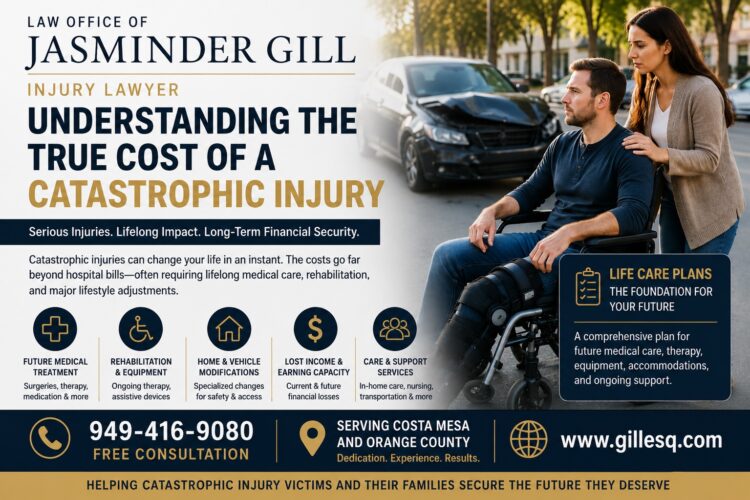
Understanding the True Cost of a Catastrophic Injury in Costa Mesa | Law Office of Jasminder Gill
When a serious accident changes your life in an instant, the immediate concerns are often medical treatment and physical recovery. But for many individuals and families, the most challenging aspect emerges over time, which is the long-term financial impact of a catastrophic injury. Whether the injury involves traumatic brain damage, spinal cord injuries, severe burns, or permanent disability, the costs can extend far beyond initial hospital bills.
Working with an experienced Costa Mesa personal injury attorney early in the process can make a significant difference in how these long-term costs are identified, documented, and ultimately recovered. A comprehensive legal approach ensures that the full scope of financial consequences is not underestimated during settlement negotiations.
Catastrophic injuries often require lifelong care, ongoing rehabilitation, and major lifestyle adjustments. These realities make it essential to look beyond short-term expenses and fully understand the economic burden that may unfold over decades.
What Makes a Life Care Plan So Important?
A life care plan is one of the most critical tools in a complex personal injury case. It serves as a detailed roadmap outlining the medical treatment, support services, and accommodations an injured individual will need for the rest of their life.
Unlike basic medical estimates, life care plans are typically developed by medical professionals, rehabilitation specialists, and financial experts who assess the long-term implications of the injury. They consider factors such as future surgeries, therapy needs, medication, assistive devices, home modifications, and even transportation requirements.
The purpose of a life care plan is not simply to project costs—it is to create a realistic, evidence-based picture of what daily life will look like moving forward. This level of detail is often essential when presenting a claim to insurance companies or in court, where proving the extent of damages is key to securing fair compensation.
The Hidden Financial Burdens Families Face
One of the most difficult aspects of catastrophic injuries is that many costs are not immediately obvious. While hospital bills and emergency care are easy to quantify, other financial burdens tend to surface gradually.
For example, a person who suffers a spinal cord injury may require in-home nursing care, specialized equipment like wheelchairs or lifts, and ongoing physical therapy. Over time, even routine expenses, such as transportation to medical appointments or modifications to a home,can add up significantly.
Lost income is another major factor. Many individuals are unable to return to their previous employment, and in some cases, they may be unable to work at all. This creates a long-term loss of earning capacity that must be carefully calculated and included in any settlement.
Families also often experience indirect financial strain. A spouse or family member may need to reduce work hours or leave a job entirely to provide care. These ripple effects can dramatically alter a household’s financial stability.
How Life Care Plans Strengthen Personal Injury Claims
From a legal perspective, life care plans play a pivotal role in building a strong personal injury case. Insurance companies are known for attempting to minimize payouts, often by disputing the extent or duration of future medical needs. A well-prepared life care plan helps counter these tactics by providing objective, expert-backed projections.
In settlement negotiations, the life care plan becomes a foundation for calculating damages. It allows attorneys to present a clear and compelling argument for why a certain level of compensation is necessary. Without this level of detail, there is a significant risk that a settlement will fall short of covering future expenses.
Life care plans are also powerful tools in litigation. If a case proceeds to trial, these plans can be presented as evidence to demonstrate the long-term impact of the injury. Expert testimony supporting the plan can further reinforce its credibility and influence the outcome of the case.
Economic Damages vs. Non-Economic Damages
In catastrophic injury cases, compensation is generally divided into economic and non-economic damages. Life care plans primarily address economic damages, which include measurable financial losses such as medical expenses, rehabilitation costs, and lost income.
However, it is equally important to consider non-economic damages. These include pain and suffering, emotional distress, loss of enjoyment of life, and the overall impact on a person’s quality of life. While these damages are more subjective, they are often substantial in cases involving permanent injuries.
A comprehensive legal strategy will address both categories, ensuring that the full scope of harm is recognized. Life care plans, while focused on financial projections, often help illustrate the broader impact of the injury, indirectly supporting claims for non-economic damages as well.
The Most Common Catastrophic Injuries After Serious Accidents in Costa Mesa
Catastrophic injuries can occur in many types of accidents throughout Costa Mesa and Orange County. While every injury case is unique, some injuries are more likely to result in permanent disabilities, lifelong medical care, and substantial financial losses.
Common catastrophic injuries include:
- Traumatic brain injuries (TBI)
- Spinal cord injuries and paralysis
- Severe burn injuries
- Amputations and loss of limbs
- Multiple fractures requiring surgery
- Permanent nerve damage
- Loss of vision or hearing
- Crush injuries
- Severe internal organ damage
These injuries frequently occur in:
- Car accidents
- Truck accidents
- Motorcycle accidents
- Pedestrian accidents
- Bicycle and e-bike accidents
- Construction accidents
- Premises liability incidents
Throughout Costa Mesa, catastrophic injuries commonly occur along major roadways including Harbor Boulevard, Newport Boulevard, Bristol Street, Baker Street, Fairview Road, the 55 Freeway, and Interstate 405.
Because these injuries often require years of treatment, rehabilitation, and future medical care, accurately calculating future damages is one of the most important aspects of a catastrophic injury claim.
Planning for the Future with Confidence
One of the most important benefits of a life care plan is the sense of clarity it provides. After a catastrophic injury, uncertainty can be overwhelming. Questions about future care, financial stability, and quality of life can create significant stress for both the injured individual and their family.
A well-developed life care plan helps answer these questions by outlining a path forward. It provides a framework for understanding what resources will be needed and how those needs can be met. This not only strengthens a legal claim but also helps families make informed decisions about their future.
Importantly, life care plans are not static documents. They can be updated as medical conditions evolve or as new treatments become available. This flexibility ensures that the plan remains relevant and continues to reflect the individual’s needs over time.
The Role of Legal Guidance in Complex Injury Cases
Navigating a catastrophic injury claim is rarely straightforward. These cases often involve multiple experts, extensive documentation, and complex negotiations with insurance companies. Having experienced legal representation is essential to ensuring that nothing is overlooked.
An attorney can coordinate with medical professionals, economists, and life care planners to build a comprehensive case. They can also advocate on behalf of the injured individual, pushing back against low settlement offers and working to secure compensation that truly reflects the long-term impact of the injury.
Without this level of guidance, it can be difficult to fully understand the value of a claim or to anticipate the challenges that may arise during the legal process.
Why Early Legal Representation Matters in Catastrophic Injury Cases
The early stages of a catastrophic injury case often determine its long-term success.
Critical evidence can disappear quickly after an accident. Surveillance footage may be erased, witnesses can become difficult to locate, and insurance companies frequently begin investigating immediately.
An experienced Costa Mesa catastrophic injury lawyer can help:
- Preserve critical evidence
- Coordinate medical documentation
- Work with life care planners and medical experts
- Calculate future medical expenses
- Determine future lost earning capacity
- Negotiate with insurance companies
- Prepare the case for trial if necessary
The goal is not simply to recover compensation for today’s bills. The goal is to secure financial resources that will protect the injured person and their family for years or even decades into the future.
Get Help from a Costa Mesa Catastrophic Injury Lawyer
If you or a loved one suffered a catastrophic injury in Costa Mesa or anywhere in Orange County, do not wait to get legal help. These cases often involve extensive damages, future care needs, and aggressive insurance company tactics.
If you are searching for a catastrophic injury lawyer in Costa Mesa, catastrophic injury attorney near you, or a serious injury lawyer serving Santa Ana, Irvine, Newport Beach, or surrounding cities, The Law Office of Jasminder Gill is ready to help.
Learn more from our Car Accident Lawyer in Costa Mesa.